
June 17-18, 2026: While you're in Frankfurt ordering your refurbished iPhone, a few kilometers away 4,500 industry folks are discussing exactly that phone. E-Waste World Expo. E-waste recycling. Sounds as exciting as reading tax forms.
Spoiler: What happens there decides whether your next smartphone costs 300 or 500 euros.
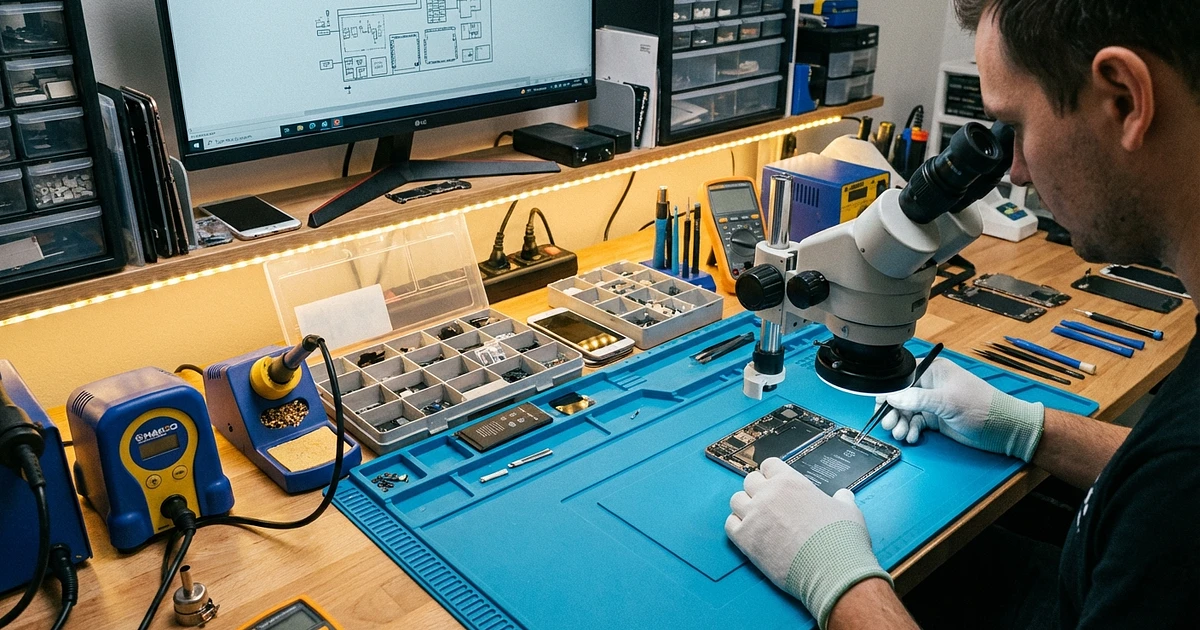
Six weeks later, on July 31, 2026, Germany must transpose the EU Right to Repair Directive into national law. What the industry discusses in Frankfurt becomes reality on refurbished shelves by 2027 as professionally refurbished electronics with warranties and quality certificates.
The Right to Repair Paradox: Nobody Wants to DIY
Right to Repair sounds like you'll need to grab a screwdriver. Reality tells a different story.
Euromonitor research found that only 27% of Europeans aged 15-29 repair items for environmental reasons. For those over 60? It's 55%. Young people want sustainable consumption, but they prefer professionally refurbished devices over DIY repairs.
80% of German adults have never repaired an electrical appliance. Why? Too expensive. An iPhone 12 display costs 324 euros for DIY, 339 euros at the Apple Store. That's 15 euros saved for two hours of frustration. This is exactly why refurbished iPhones from professional providers make far more sense than DIY repairs.
Here's the real kicker: Right to Repair isn't a hobbyist law. It's a refurbisher law. And that's why a market you've probably never heard of is exploding right now.
Refurbished Market Grows Through Right to Repair: From $5B to $24B
From $5.48B to $24.1B by 2035. That's 14.42% annual growth. In ten years, nearly one in five Germans will buy refurbished instead of new.
Why? Not because everyone suddenly became eco-warriors.
The EU Right to Repair Directive forces manufacturers to supply spare parts. Not to you at home. To independent repair shops and refurbishment companies. Apple, Samsung, and others must give up their parts monopolies. (That these were even legal is another topic.) This makes professionally refurbished devices cheaper and more available.
A refurbished phone today costs 30-50% less than new. Through Right to Repair, refurbishment costs drop further. Refurbished phones get even cheaper.
The European Parliament report calculates that EU consumers lose 12 billion euros annually by replacing instead of repairing. The new law aims to recover 4.8 billion of that.
Digital Product Passport: Finally Know What You're Buying
2028: You scan a QR code on your "refurbished" phone. And see immediately that only the screen was replaced. For 12 euros. The seller wanted 350 euros for it.
Welcome to the Digital Product Passport. Bullshit detector for refurbished buyers.
Starting 2028, electronics get Digital Product Passports. A QR code on every device shows the complete repair and refurbishment history. The DPP is a direct result of Right to Repair: transparency about components and repairs makes devices last longer.
For refurbished buyers, this changes everything. Was the phone actually tested? Which parts were replaced? The DPP provides answers. No longer a matter of trust. Just facts.
A circularity report by Fraunhofer IZM reveals the potential: if 80% of Germans switched to used or refurbished smartphones, it would save 200,000 tons of CO2 annually. Currently, only 14% of phones in Germany are second-hand. How you can actively avoid e-waste is explained in our practical guide.
What This Means for You
Imagine you want to buy a Samsung Galaxy S24 in early 2027. New price: 899 euros.
Until 2026, you had two options: Buy new or trust a refurbished seller without knowing what they actually did.
From summer 2026, things look different:
More refurbished phone options. Manufacturers must supply spare parts, making refurbishment cheaper.
Better quality through standards. The E-Waste Expo discusses new certifications for refurbishment quality. What gets decided there shows up at major retailers in 2027. Discover all refurbished sellers compared now and find the best provider for your needs.
Transparent device history from 2028. Every Digital Product Passport shows you the complete refurbishment and repair history, including replaced components.
Potentially repair bonuses. Berlin tried it: 1.25 million euros in repair bonuses. After five months: gone. Each repair was subsidized with 50-100 euros. Too slow? Tough luck. Whether the federal government rolls this out nationwide? Open question. But demand would definitely be there.
Questions You Probably Have Now
Do I have to repair my phone myself now?
No. This is the most common misconception about Right to Repair. EU Directive 2024/1799 only forces manufacturers to supply spare parts to independent repair shops. You can fix things yourself if you want. But you don't have to. Professionals do it better - and from 2026, cheaper too.
How do I know a refurbished phone is actually good?
Currently: trust. From 2028: Digital Product Passport. Scan QR code, see complete repair history. Which parts were replaced, by whom, when. No more seller promises needed.
Does it make financial sense?
Math for an iPhone 12 display: 324 euros DIY (not counting your time), 339 euros at Apple. 15 euros difference for two hours of fiddling and warranty loss. A refurbished iPhone 12 in "very good" condition starts at 280 euros. Complete. With warranty.
When is the E-Waste World Expo 2026?
The expo takes place June 17-18, 2026 at Messe Frankfurt. Over 400 exhibitors and 4,500 visitors expected. Parallel conferences cover e-waste recycling, battery recycling, and IT asset disposition topics.
Where can I buy refurbished phones?
Major sellers like Refurbed, Back Market, and rebuy offer refurbished phones with 12-30 month warranties. Right to Repair ensures more devices can be professionally refurbished - supply grows significantly from 2026.
Back to Frankfurt
While the E-Waste Expo in June 2026 discusses recycling standards, something bigger happens next door: An industry prepares for you never needing a new phone again.
Manufacturers know this. That's why they fight every line in the law. And that's why it's worth watching closely what gets decided there.
Your next smartphone probably already sits in some workshop. It just doesn't know it yet.