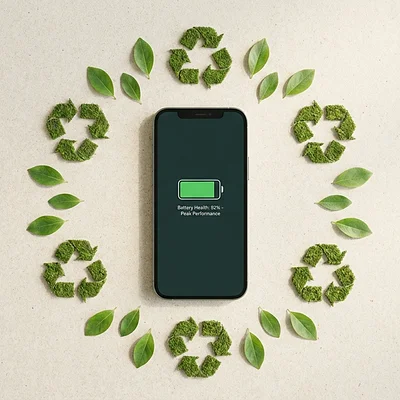
Thinking about buying a refurbished iPhone without getting burned? Smart move. Refurbished (also: renewed or remanufactured) devices cost 30 to 50 percent less than retail—and save 25 kg of CO2 annually compared to buying new.
But here's the problem: The market is a jungle of different condition grades, warranties, and sellers who all claim to be the best. Some offers are brilliant. Others? Stay away.
What should you check when buying a refurbished iPhone? These five points separate good deals from expensive mistakes.
1. Battery Health: The Most Important Technical Check
Battery health is the difference between "lasts all day" and "I need the charger by noon." Experts recommend at least 85 percent for refurbished devices—better 90 or higher.
What does this mean in practice? An iPhone with 80 percent battery health might only manage 6 hours of active use instead of the original 8. With intensive use, you'll be hunting for a power outlet by 3 PM.
Below 80 percent? Only buy if you're planning to replace the battery anyway (costs around €89 at Apple, from €40 at third-party shops).
Important: Check the battery health yourself after purchase under Settings > Battery > Battery Health. Seller screenshots? You could make those in Photoshop too.
2. Refurbished iPhone Warranty: 12 vs 36 Months Makes a Real Difference
Warranty length varies widely—and it has consequences. Swappie and Rebuy give you 36 months, while Refurbed and Back Market start at 12. That's three years of protection versus one year. That's triple the coverage for your refurbished iPhone.
The warranty length is a critical buying criterion for refurbished iPhones.
Does it really matter? For an iPhone 11 at €300, probably not. For an iPhone 15 Pro at €900? Absolutely. If the display fails or the camera glitches after 18 months, you're stuck with repair costs (averaging €200-€400) if you only had 12 months coverage.
Rule of thumb: The more expensive the device, the more valuable the longer warranty. Above €600 purchase price, I wouldn't accept 12 months anymore.
3. Return Policy: 14 Days Are Mandatory
For online purchases, you have a 14-day withdrawal right. Sounds obvious, but many people waste it. Most unbox the iPhone, think "looks good," and just use it. Mistake.
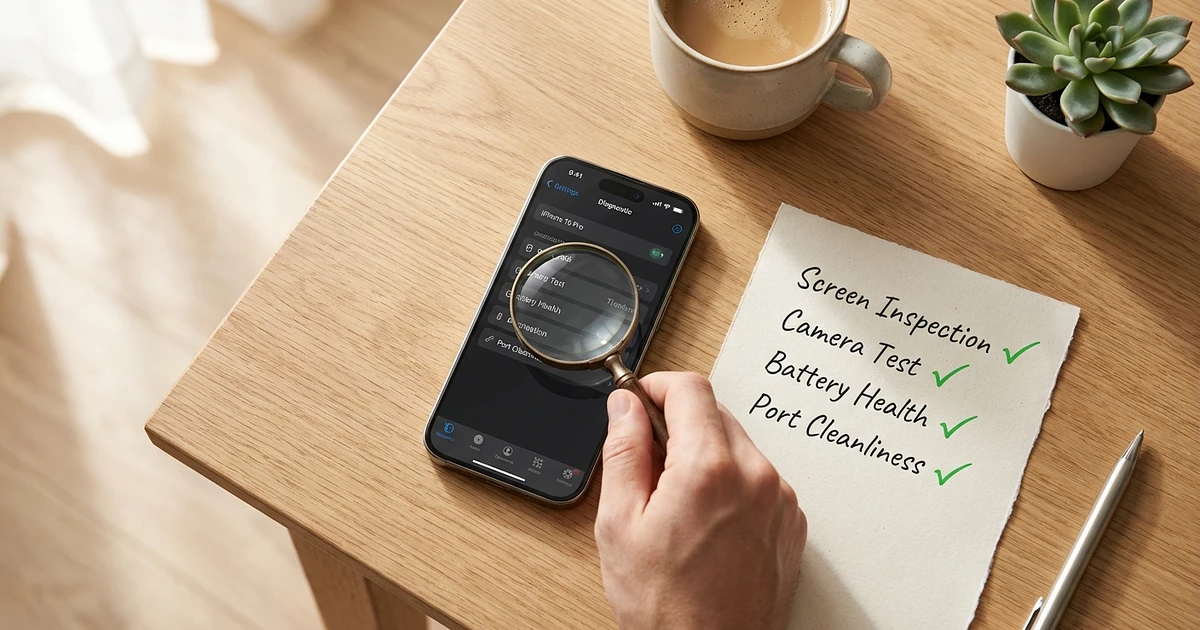
Use the 14 days as a free test drive:
Display: White background, maximum brightness—see any spots, discoloration, dead pixels?
Camera: Take 20 photos in different lighting. Blurry or washed out? Send it back.
Face ID: Does it work with a mask, without a mask, with glasses? (Many refurbished iPhones have issues here)
Battery: Charge it fully three times. Does it hold up to the promised capacity?
This ensures the refurbished iPhone meets your expectations.
In-store purchase? Then you don't automatically have this right. Only online.
4. Condition Grades for Refurbished iPhones: Not Standardized
Here's where it gets tricky. Condition grades—"Like New," "Very Good," "Good"—sound objective. They're not.
The European Consumer Centre explicitly warns: "These categories have no universal validity. Sellers can make them up as they please." A refurbished iPhone graded "Very Good" from Seller A might be worse than a "Good" from Seller B. Zero standardization.
What does this mean for you? Largely ignore the condition grades. Instead, ask for concrete details:
Battery capacity in percent?
What visible scratches/blemishes exist exactly?
Are original parts installed or third-party components?
Are there photos of the actual device (not stock images)?
The warranty and return policy are your real protection—not a label that means nothing.
5. Reputable Seller: Independent Testing Provides Guidance
Stiftung Warentest tested nine shops in 2023. Result: Six received a "good" rating, with Rebuy winning as test leader. This shows: The market is better than its reputation.
At refurbito, you can compare prices and warranty terms across different sellers directly.
Want to play it extra safe? Apple Certified Refurbished delivers devices with 100 percent battery health and a new outer shell. The catch: You only save about 15 percent instead of 30-50 percent.
Is it worth it? Depends. If you're someone who can't sleep at night wondering "what could go wrong," then yes. For everyone else: A reputable seller with a good warranty is plenty.
Conclusion: Most Mistakes Happen in the First 5 Minutes
Finding a good refurbished iPhone isn't rocket science—but most people skip exactly the checks that make the difference. They see "30% cheaper," click "Buy," and then wonder why the battery dies after three months.
Your pre-purchase checklist:
1. Battery health at least 85% (better 90%+)
2. Warranty for expensive devices 24+ months
3. Use the 14-day return policy (really use it, not just have it)
4. Ignore condition grades, ask for concrete details
5. Reputable sellers (Rebuy, Swappie, refurbed, Back Market)
At refurbito, you can compare iPhone prices across all sellers to find the best deal. For even more details, read our complete iPhone buying guide.
Whether you're looking for an iPhone 15 Pro or an older refurbished model—the basic principles stay the same. In our detailed seller comparison, you'll learn more about individual retailers.
Your turn now. Good luck saving money.
Sources: