Maria buys a refurbished iPhone 11 for €450 with a 12-month warranty. Stefan finds the same model used from a private seller for €320 and pockets the difference. Three months later, Stefan's phone is dead. The seller? Deleted their account weeks ago. Maria's iPhone? Still running perfectly.
Which decision was smarter?
Maria made the right choice – not just because of the €130 savings, but because she has someone who stands behind faulty hardware. The difference between refurbished and used isn't just about price. It's about warranty protection, quality assurance, security, and ultimately: your money.
This guide will show you why warranty changes everything, what to watch for with private purchases, and how to make the right choice (spoiler: it depends on your situation).
What Does Refurbished Actually Mean?
Refurbished refers to devices that were previously used and then professionally restored by specialists. That might sound similar to used. It isn't.
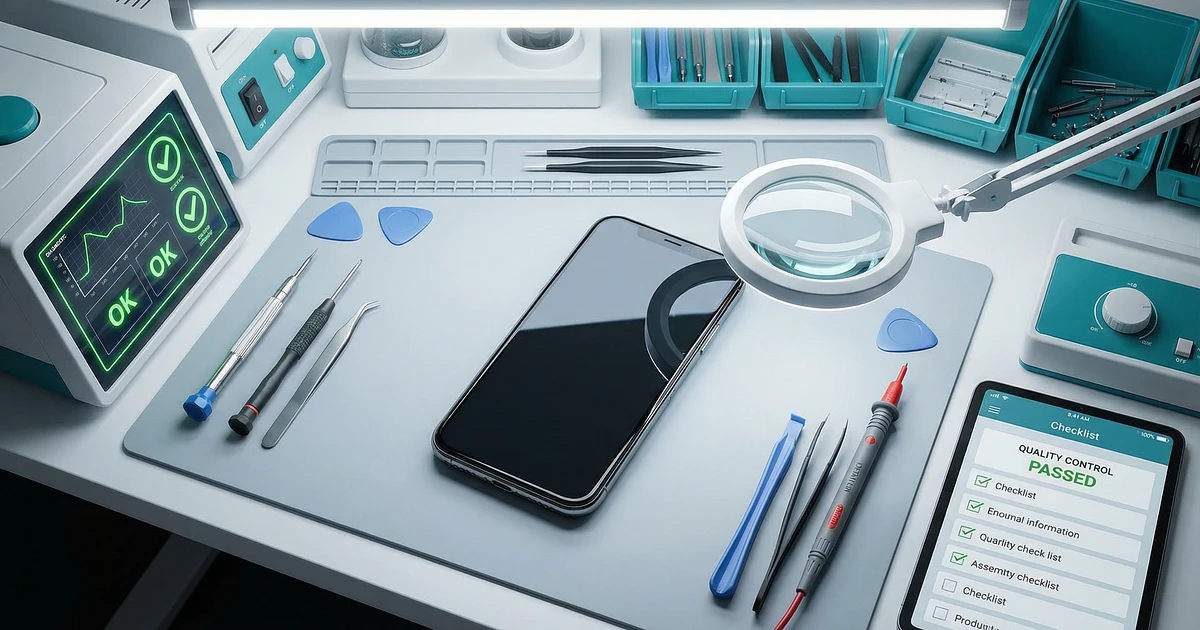
The difference between refurbished and used becomes clear in the restoration process. While used devices are resold directly, refurbished products go through a standardized process:
Complete technical testing of all components
Cleaning and sanitization
Replacement of defective or worn parts (often battery, display)
Installation of current software
Quality control according to standardized criteria
Packaging with accessories and documentation
The result: A refurbished device works like new but costs significantly less. Refurbished sellers offer professional restoration with quality guarantees – used private sales don't.
If you want to learn more about refurbished devices, we have a comprehensive guide on the topic.
A used device, on the other hand, is sold as-is. No restoration, no systematic testing, often no warranty. That's the fundamental difference that protects or endangers your money.
The Legal Difference: Why Warranty Changes Everything
And here's the reason Maria made the right choice: In Germany (and much of the EU), commercial purchases are governed by completely different rules than private sales. The difference between refurbished and used becomes especially clear with warranty coverage.
With Commercial Sellers (Refurbished Shops)
According to German consumer protection law, commercial sellers must provide at least 12 months of warranty. For used goods, the statutory 24-month period can be reduced to 12 months. Many refurbished sellers voluntarily offer longer warranties.
This means specifically:
Your device is defective? The seller must repair or replace it.
In the first 12 months, the seller must prove that the defect wasn't already present at delivery.
You have 14 days right of withdrawal for online purchases.
With Private Purchases (Used from Online Classifieds)
Private sellers can completely exclude warranty. You'll see this as "private sale, no warranty, no returns." And yes, that's legal.
The consequence: If your device dies after a week, you're out of luck. Unless the seller deliberately concealed defects. Proving that in practice is nearly impossible.
The Bavarian Consumer Portal confirms: Refurbished devices from commercial sellers are subject to the same legal provisions as new products.
The Warranty Comparison Table
| Seller Type | Warranty | Right of Withdrawal | Burden of Proof (Year 1) |
|---|---|---|---|
| Commercial seller (new) | 24 months | 14 days | On seller |
| Commercial seller (refurbished) | 12-24 months | 14 days | On seller |
| Private individual | Can be excluded | None | On you |
This table shows the difference between refurbished and used at a glance. For a complete overview of all seller warranties, we recommend our warranty comparison.
Quality Differences: What You Actually Get
How do refurbished and used differ in practice when it comes to real quality? Stiftung Warentest (Germany's leading consumer testing organization) tested nine refurbished shops in 2023 and purchased 45 smartphones to investigate these differences.
The results were revealing: Six out of nine shops scored "good." But even here, there were quality differences – especially compared to used devices without quality control.
The Good News
7 out of 45 tested devices were in significantly better condition than advertised. The sellers under-promised and over-delivered. That builds trust.
The Not-So-Good News
But surprise: 9 out of 45 devices were worse than described or not fully functional. That's roughly one in five – sounds bad. However, the worst rate (36%) came from Amazon Renewed, the best (13%) from Back Market. So: seller differences are bigger than general failure rates.
What About Private Purchases?
The problem: There's no unified standard for private purchases. Every seller describes their condition differently. "Very good" might mean "like new" to one person and "still works" to another. This makes objective comparison impossible.
A ComputerBase user describes their experience: "My refurbished iPhone from Amazon was better than expected – new battery, no scratches." But in the same forum, someone else tells a horror story: They bought a device privately, the seller promised it worked perfectly. After three days it was dead – the seller was unreachable, and the buyer was out €250.
That's the difference between refurbished and used: With reputable refurbished shops, you have someone to turn to. With private purchases? Good luck.
The Difference in Condition Grades: Why Two Refurbished Devices Aren't Equal
Not all refurbished is the same. The difference lies in condition grades that tell you what to really expect. Most refurbished sellers use standardized condition grades, while private listings vary wildly in description.
| Condition | Also Called | What It Means |
|---|---|---|
| Like new / Grade A | Excellent, Pristine | No visible wear, looks and works like new |
| Very good / Grade B | Very Good | Minimal scratches, only visible on close inspection, full function |
| Good / Grade C | Good | Visible wear marks, works perfectly |
| Acceptable / Grade D | Fair | Clear scratches or dents, functional |
The problem: There's no binding standard. "Very good" at one seller might look different than "very good" at another. That's why it pays to read descriptions carefully and ask the seller if in doubt.
With private purchases? Everyone describes their condition however they want. Photos help but don't show everything.
The Price Advantage: How Much Do You Actually Save?
Refurbished devices typically cost 20-50% less than new, but concrete examples are more convincing:
An iPhone 15 costs €799 new. Refurbished? About €500-600 – that's roughly 30% savings. For older models, the discount is bigger: The iPhone 12 isn't sold new anymore – refurbished you get it from €280. That's 65% below the original €799 retail price.
Concrete examples from the 2023 Stiftung Warentest test:
Samsung Galaxy S20: Over €300 savings compared to the original retail price
iPhone 11: About €230 cheaper than the lowest new price
Used devices often cost another €50-100 less than refurbished. Sounds tempting – and yes, if your budget is tight, I understand. But here's the catch:
The Total Cost Calculation Shows the Real Difference
Scenario 1: You buy a refurbished iPhone for €450 with a 12-month warranty. It runs for two years without problems. Total cost: €450.
Scenario 2: You buy the same model used for €320 without warranty. It runs for two years. Total cost: €320. Congratulations!
Scenario 3: You buy used for €320. After six months, it's broken. You now buy refurbished for €450. Total cost: €770.
The question isn't "What does it cost now?" but "What does it cost if something goes wrong?" The €130 price difference between refurbished and used is your insurance premium against failure costs.
You can compare iPhone prices and find the best refurbished deals.
The Environmental Factor: Why Both Beat Buying New
There's no big difference here: Whether refurbished or used, both beat a new purchase in terms of sustainability by a landslide. The numbers from a Fraunhofer study are impressive:
| Device | CO₂ Savings vs. New | Water Savings |
|---|---|---|
| iPhone 11 | 78% | 86% |
| MacBook Air 2017 | 83% | 91% |
| Lenovo ThinkPad T460 | 69% | 85% |
| Samsung Galaxy S20 FE | 72% | 84% |
A new iPhone 11 produces about 72 kg of CO₂. A refurbished model only around 15.7 kg. That's a difference that matters.
For used devices, the savings are similarly high because in both cases no new device needs to be manufactured. The environmental benefit isn't an argument for or against refurbished, but for second-hand in general.
According to the TÜV Association, 35% of Germans have purchased a used or refurbished IT device in the last two years. Among 16-29 year olds, it's 55%. The trend is clear.
The Decision Guide: When Refurbished, When Used?
Okay, what does this mean for your decision? When should you buy refurbished, when used?
Buy Refurbished When:
You need the device daily (work phone, main laptop). A breakdown would be expensive or stressful.
You have limited technical know-how. Can you check if the battery is still okay? If not, let the professionals handle it.
It's a complex device (smartphone, laptop). Many components, many potential failure points.
You want to use it for more than 12 months. The warranty gives you security.
The device is a gift. Nothing is more embarrassing than a defective gift with no return option.
Buy Used from Private Sellers When:
You're a bargain hunter with risk tolerance. You know it could go wrong, and you accept that.
You can identify problems yourself. You know how to check battery condition, look for SIM locks, spot water damage.
It's a secondary device. Kids' tablet, backup phone, occasional laptop.
You can meet the seller in person. With local deals, you can test the device thoroughly before buying.
The price advantage is significant. 10% cheaper than refurbished? Not worth it. 40% cheaper? Getting interesting.
Decision Matrix
| Situation | Recommendation | Why |
|---|---|---|
| Primary device for work/study | Refurbished | Breakdown too risky |
| First smartphone for a child | Used can work | It'll get dropped anyway |
| Gift for someone else | Refurbished | Return rights matter |
| Tech enthusiast with expertise | Used can work | Can spot problems yourself |
| Extremely tight budget | Used with caution | But: consider total cost of ownership |
| Long-term use (2+ years) | Refurbished | Warranty protects you |
The Best Refurbished Sellers According to Stiftung Warentest
Not all shops are equal. The difference between refurbished sellers is clear in the 2023 Stiftung Warentest test:
| Seller | Score | Strengths | Weaknesses |
|---|---|---|---|
| Back Market | 1.8 | Test winner, good quality control | Marketplace, varies by seller |
| eBay Refurbished | 2.1 | Large selection | Marketplace model |
| Rebuy | 2.2 | Own retailer, reliable | Sometimes higher prices |
| refurbed | 2.3 | Marketplace focused on sustainability | Quality depends on seller |
| Asgoodasnew | 2.3 | Own retailer | Smaller selection |
| Clevertronic | 2.5 | Good prices | Less well-known |
| Amazon Renewed | 2.8 | Brand recognition, easy returns | Terms and conditions issues in test, worse success rate |
You can compare prices from different sellers directly at refurbito. We show you where the device is currently cheapest.
Important: Back Market, refurbed, and eBay Refurbished are marketplaces. They don't sell themselves but bundle offers from vetted sellers. Rebuy, Asgoodasnew, and Clevertronic are own retailers with their own refurbishment. Both can work, but you should know what you're dealing with.
Find more details about individual shops in our comprehensive seller comparison. The most popular refurbished products show you what other buyers are choosing.
What Sellers Don't Tell You: What to Watch Out For
Even with refurbished, there are pitfalls. Here are a few things you should check yourself:
1. Battery Condition
The battery is the weak point of used devices. On iPhones, you can check capacity under Settings > Battery > Battery Health. Below 80%? The battery is worn.
Good refurbished sellers replace batteries under 80% or disclose it. Ask if in doubt.
2. Read Warranty Terms Carefully
Not every warranty is worth the same. Some sellers exclude battery wear. Others pay only partially. Read the fine print before you buy.
The Bavarian Consumer Portal recommends: Check warranty terms for transparency and watch for additional repair costs.
3. SIM Lock and Activation Lock
A device with SIM lock only works with certain carriers. An activation lock (on iPhones: "Find My iPhone") could mean the device is stolen. Reputable sellers check this. With private purchases, you have to watch out yourself.
4. Software Status and Update Capability
A refurbished iPhone 8 might work. But will it still get security updates? Check before buying how long the manufacturer will support the model. Otherwise, you'll soon have a security risk in your pocket.
When Things Go Wrong: Your Rights - The Crucial Difference
Let's say your refurbished device is defective. What now? The difference between refurbished and used becomes especially clear here – your rights are fundamentally different depending on where you bought.
With Commercial Sellers (Refurbished)
- Contact the shop. Describe the problem objectively.
- Assert your warranty rights. In the first 12 months, the seller must prove the defect wasn't present at delivery.
- Demand repair or replacement. You're entitled to either.
- Document everything. Keep screenshots, photos, emails.
With Private Purchases (Used)
This is where it gets difficult. The difference is that private sellers can completely exclude warranty. If the seller excluded warranty, you have little recourse. Unless you can prove they deliberately concealed defects. In practice, that's nearly impossible.
The Bottom Line: Smart Decisions Over Blind Savings
The difference between refurbished and used is more than semantics. It's about warranty, quality, and ultimately whether you're on your own when problems arise or whether you're protected.
My recommendation: For important devices you need daily, refurbished is the smarter choice. The 15-30% premium over private purchases is your insurance. For secondary devices or if you're technically savvy yourself, used can work, if you know what to watch for.
And if you want to compare different refurbished sellers: That's exactly what refurbito is for. We show you where the device is cheapest and which seller offers which terms.
Good for your wallet, better for the environment.