
Is an EU-Wide Standard for Refurbished Condition Grades Coming?
 5 min read
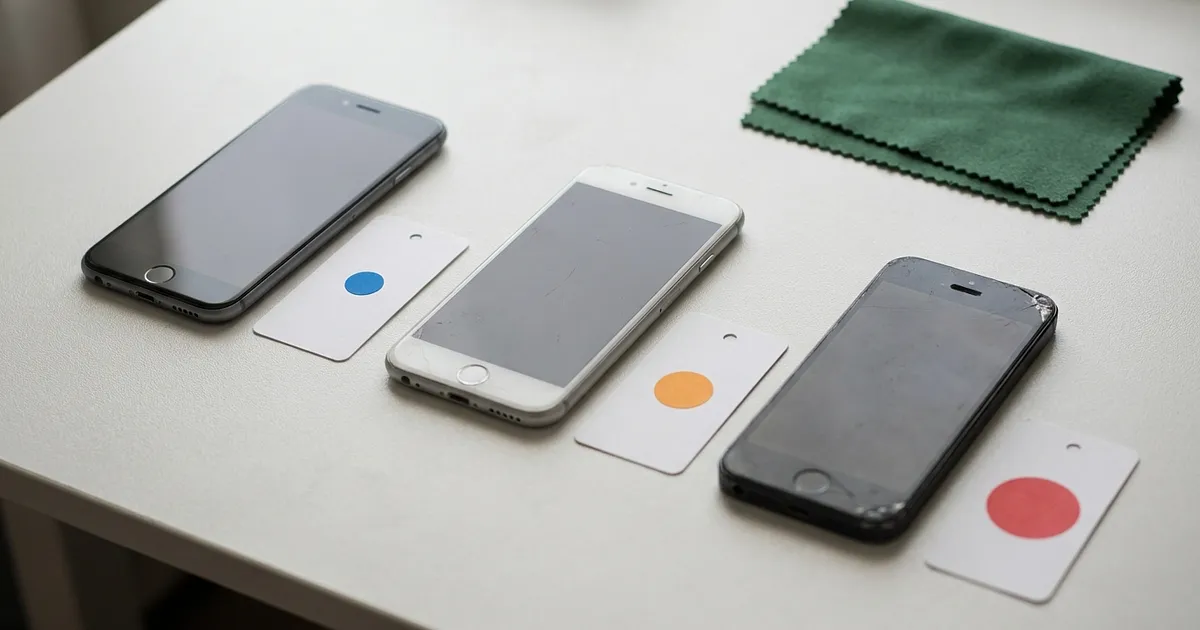
The question resurfaces every few months, usually right after some Brussels headline lands: is there finally a binding definition of what "very good" means on a second-hand phone? I went through the rulebooks that keep getting mixed up here. The answer is honestly a bit boring.
What EN 50614 actually covers
The only genuine EU-wide standard in this space is EN 50614, published in February 2020. It governs the refurbishment process for waste electronics: visual inspection, recall-list checks, safety and function testing, documentation, and a minimum 90-day warranty.
Nothing about scratches. No display tiers. No scale running from "like new" down to "heavily used".
Even that process standard isn't enforced evenly everywhere. The WEEE Forum has long argued the existing CENELEC standards should be made mandatory across the EU. Trade bodies don't campaign for things that already happen.
EU Repairability Label: Not the Same as Condition
Since 20 June 2025, new smartphones and tablets sold in the EU carry a label graded A to E, set out in Energy Labelling Regulation (EU) 2023/1669 (its companion Ecodesign Regulation (EU) 2023/1670 sets the repairability requirements behind it).
That label rates a factory-fresh device's repairability and durability on the shop shelf, not the condition of the used iPhone in your basket.
Right to Repair Europe welcomed the label in 2025 and criticised it for leaving spare-part pricing out. Nobody in that debate discusses used-device condition tiers. Two separate building sites. What's changing for smartphone buyers under the Right to Repair, we've broken down separately.
France has a law, the Netherlands has a seal
Nationally things get more concrete. But the two front-runners aren't comparable, even though coverage keeps lumping them together.
France used Décret n° 2022-190 of 17 February 2022 to define in law when a product may be sold as "reconditionné" at all, including a mandatory functional test. On top of that, sellers must display the indice de durabilité, introduced by Décret n° 2024-316 of 5 April 2024. That's binding law.
The Dutch version is something else entirely: "Refurbished Quality", a voluntary quality mark run by TÜV NORD Nederland. Over 50 test points, a minimum of 85% battery capacity, a two-year warranty, three appearance classes. Solid scheme. Also entirely optional, and not government policy.
Binding decree versus voluntary seal. Not the same thing.
Refurbished Condition Grades: "Very Good" Doesn't Mean the Same Thing Everywhere
While nothing is harmonised above them, every seller defines its own tiers. A giga.de comparison shows it between Back Market and refurbed: Back Market's "very good" tier permits scratches that only have to be invisible from 50cm away, plus at least 85% battery capacity. What each term means at which retailer today, we've broken down in our overview of refurbished condition grades.
How far apart those tiers sit on price shows up best inside a single seller's list. At asgoodasnew, the top "wie neu" tier puts the Galaxy S25 Ultra with 512GB at 749.00 euros as of 17 September 2026.
Samsung Galaxy S25 Ultra 512GB titanium black
View at asgoodasnewAffiliate link. Buying through it earns us a commission; the price stays the same for you.
One tier down is labelled "sehr gut"
The 2019 MacBook Pro with an i9 and a 1TB SSD lands in that same list's "sehr gut" tier at 630.00 euros (17 September 2026). Per giga.de, those same words mean a 50cm rule at Back Market; here they're a different seller's criteria entirely: how "very good" is actually defined at Refurbed, Back Market and rebuy, our platform comparison shows.
Apple MacBook Pro 2019 15" Touch Bar/ID Intel Core i9 2,30 GHz 1 TB SSD 32 GB space grau
Apple MacBook Pro 2019 15" Touch Bar/ID Intel Core i9 2,30 GHz 1 TB SSD 32 GB space grau
View at asgoodasnewAffiliate link. Buying through it earns us a commission; the price stays the same for you.
At the bottom this seller says "budget"
The iPhone SE with 64GB sits in the budget tier at 140.00 euros (same 17 September 2026 list). "Budget" appears in none of the three rulebooks above, purely a merchant's word. How wide that price gap gets on the identical model, we've measured separately: what the price premium between condition grades actually costs.
Apple iPhone SE 64GB space grau
View at asgoodasnewAffiliate link. Buying through it earns us a commission; the price stays the same for you.
And the Digital Product Passport?
The Digital Product Passport under the ESPR starts for electronics in 2027 at the earliest, a lifecycle-data disclosure mechanism, not a condition scale.
Until then things stay where they are. The label belongs to the seller, not the legislator. Anyone comparing refurbished condition is comparing seller definitions, not an EU standard that doesn't exist yet.
All products from this post
The ones we named above are marked; the rest are alternatives in the same category.
Affiliate notice: As an Amazon Associate, we earn from qualifying purchases. Product prices and availability are subject to change.
Frequently Asked Questions
Why do Refurbed, Back Market and Rebuy use different labels?
Because there's no binding rule to align with. Each platform built its own tiers, with its own scratch tolerances, battery minimums and wording. Honestly, that confuses buyers more than it should: identical names don't guarantee identical condition.
When might an EU-wide grading standard arrive?
There is currently no confirmed timeline. The WEEE Forum is at least pushing to make the existing process standards mandatory. No date for a condition scale exists so far, and any year you see quoted is a guess.
Which EU countries already have rules for refurbished condition claims?
France and the Netherlands, and they differ sharply. France has a binding decree defining "reconditionné". The Netherlands has a voluntary industry quality mark with TÜV testing. Other member states have neither so far, honestly thin for one shared market.