Rebuy Review 2026: What Direct Selling Changes Compared to a Marketplace
 16 min read
Search for a Rebuy review and you fall into the same hole every time. Star ratings, a forum thread from 2019, someone who sold their old phone and didn't like the price. The one question that actually matters when you buy a used device is almost never in there: who exactly are you signing a contract with?
Sounds like lawyer talk, I know. But warranty, statutory rights and returns all hang off that question. And at Rebuy the answer comes out differently than at Back Market or refurbed.
We at Refurbito don't sell anything ourselves. We compare offers, and to do that we read the providers' terms. For this piece I pulled Rebuy's terms as a PDF and read them, 19 pages, dated May 2024. What's in there is a good deal more interesting than any star rating.
Who is your counterparty at Rebuy?
According to the terms and conditions of rebuy recommerce GmbH (dated May 2024; German original: „zwischen Ihnen und uns, der rebuy recommerce GmbH“), the user relationship and every purchase or buy-back contract is formed directly between you and rebuy recommerce GmbH itself. No third party in between, no seller profile, no merchant ID hidden in the fine print.
The company behind it is named in the terms: rebuy recommerce GmbH, Erkelenzdamm 11 to 13, 10999 Berlin, registered in the Charlottenburg commercial register under HRB 109344 B.
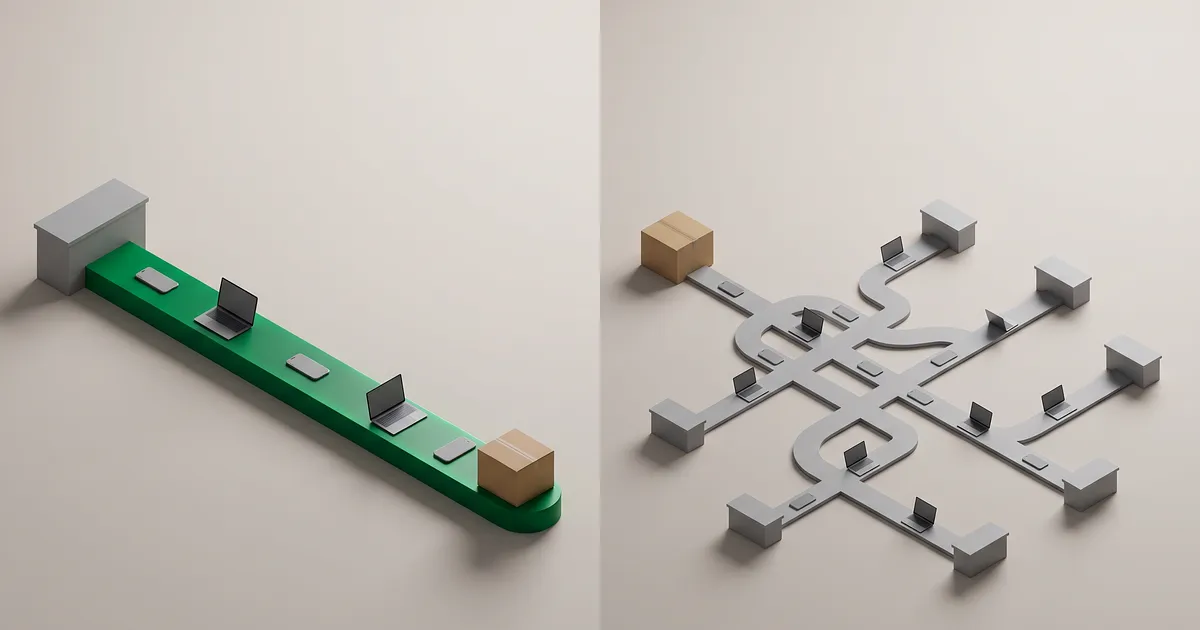
Dry stuff, but it has a practical consequence. Buy ten times at Rebuy and the same legal entity is your counterparty ten times. Same process, same deadlines, same address for complaints, and nobody hands you off to someone else. On a marketplace that changes with every listing.
One detail from the same chapter that I hadn't expected: in §3 II.2 Rebuy calls the goods on offer „unsere Waren“, our goods. Sounds trivial. It's the language of a seller, though, not of a broker.
Buy-back: Rebuy also buys from you
Among the three big names Rebuy is the odd one out, because the business runs in both directions. And it runs through the same set of terms.
The process is in §2. You submit an offer through the buy-back function and describe your device using Rebuy's own catalogue and condition criteria. Rebuy quotes a price. The terms then give you 14 days from submitting your offer to ship the item (German original: „Sie haben 14 Tage ab Abgabe Ihres Verkaufsangebotes Zeit, uns das von Ihnen angebotene Produkt zu senden.“). Once it arrives it gets checked. If the actual condition matches your description, the contract is formed at the quoted price. If it doesn't, Rebuy may make a counter-offer, which you can accept or decline within 14 days.
Rebuy pays out via bank transfer, PayPal, or voucher. On the voucher route Rebuy adds ten percent to the buy-back price per §2 III, describing the voucher value as the purchase price plus „einem Aufschlag in Höhe von 10% des Ankaufpreises“.
Why does that belong in a buyer's guide? Because it's the same company taking your old device and selling you the next one. Selling and buying sit inside one contractual relationship at Rebuy. That can be convenient. It also means the voucher ties you to exactly one provider, and the price comparison quietly disappears. Ten percent is ten percent. I don't think it's a law of nature saying the total works out cheaper either.
Statutory rights and the rebuy guarantee are two different things
This is where most articles blur something, and honestly it annoys me, because it's the point where readers can actually lose money.
Gewährleistung, statutory liability for defects, comes from the law. You get it whether the seller mentions it or not. Per the German consumer association Verbraucherzentrale (dated 06.03.2025), it runs for two years from handover, and for used goods a seller may limit it to one year (German original: „kann... diesen Zeitraum auf ein Jahr begrenzen“). May. Doesn't have to. The legal basis is § 476 BGB (retrieved 13.08.2026), and shortening it requires informing the consumer separately before the contract is concluded.
Rebuy doesn't use that option. Its own terms (§3 VI.1, dated May 2024) state that for consumers the statutory period of 24 months applies to new and used goods alike, starting at delivery.
A guarantee is something else. Voluntary, contractual, with its own rules. Per Rebuy's own warranty page (retrieved 13.08.2026), there's a 36-month „rebuy-Garantie“ on electronic items, on top of the statutory period. The terms describe in §3 VII what it covers: all functions of the device that the manufacturer defined as its technical specifications at factory delivery. Repair is the default. Where repair isn't possible, Rebuy keeps the device and refunds the purchase price, and the choice between the two sits with the company.
If the split between statutory rights and a voluntary guarantee is what you came for, we unpacked it at more length in our warranty guide for refurbished devices.
What the rebuy guarantee doesn't cover
The exclusion list in §3 VII.2 is longer than you'd think. It names wear parts such as removable memory cards, fragile parts such as glass, displays and lenses where they break, consumables such as batteries, software defects, operating errors, damage from chemicals and aggressive environmental influences, installation and transport damage, and broken seals. Media items like DVDs, books and software are out anyway.
The battery is the one I'd most likely miss. It counts as a consumable and therefore falls outside the guarantee. That's industry standard for used electronics, but it rarely shows up this plainly in a review.
The water-resistance point almost nobody mentions
This is my favourite find from the PDF, because it's so concrete. Rebuy states in its own terms (§3 II.6, dated May 2024; German original: „Wir verkaufen unsere Geräte daher als nicht wassergeschützt, weil wir den Grad der Abnutzung durch die vorherige Nutzung nicht überprüfen können.“) that it sells devices as not water-protected, because it can't check how much prior use has worn that protection down. That reasoning shows up in the same paragraph: resistance to water and dust decreases with use.
In plain terms: even if the manufacturer once marketed the model with IP68, that property is not part of what you're buying second-hand. Guarantee and statutory claims for water damage are excluded under the same clause. Anyone taking a used smartphone to the beach should have read that.
Rebuy condition "very good": what grading tiers do and don't do
Now the part where I have to be straight with you. Rebuy describes each device's condition using its own categories, and the buy-back rules in §2 I.1 explicitly point at its own product catalogue and its own condition criteria. I could not get first-hand verification of the exact wording of the individual tiers for this article, so I'm not quoting them. Better no definition than a wrong one.
What matters more than the exact wording is what a scale like that structurally is.
A direct seller grades its entire stock against a single internal yardstick. Whether the device came from Berlin or from the logistics centre changes nothing about the definition. Inside that one company, "very good" always means the same thing, because one place assigns it.
Which, I'd guess, is exactly why it doesn't travel. A direct seller's condition tier is a house label, not an industry standard. There is no DIN norm for "very good" used smartphones. Compare offers across providers and you are not comparing identical conditions, even when both use the same word.
Two practical consequences. Within one provider you can trust the tier and weigh the price gap between two grades sensibly. Between providers you need the description underneath, not the label on top. How the different houses cut their tiers is in our overview of refurbished condition grades.
How Back Market and refurbed work differently
Both are marketplaces, and both say so themselves.
Back Market describes itself in its own terms of sale (retrieved 13.08.2026; German original: „Plattform-Betreiber und nicht Verkäufer der angebotenen Produkte“) as a platform operator, not the seller of the products offered. Orders under those same terms are placed with the sellers, not with the platform.
Refurbed puts it the same way in its own questions and answers (retrieved 13.08.2026; German original: „Dein Vertragspartner ist der jeweilige Händler, bei dem du das Produkt kaufst. Refurbed bietet die Plattform für Verkäufer und Konsumenten an.“): your counterparty is the merchant you buy from, and refurbed provides the platform.
The guarantees follow that structure. Per the Back Market warranty certificate (retrieved 13.08.2026), the individual seller, not Back Market itself, guarantees freedom from defects for twelve months from delivery. Back Market steps in, by its own description, only when the seller fails to respond, and then acts on the seller's behalf (German original: „im Namen und im Auftrag des Verkäufers“). Refurbed's FAQ says every product ships with a minimum guarantee of 12 months, effective on the day of purchase. Minimum, provided by the merchant.
One example of how a marketplace steers quality through minimum standards instead: refurbed states battery thresholds in the same FAQ for a device to be listed at all. „Sofern nicht anders angegeben behalten Batterien ≥85% ihrer ursprünglichen Kapazität bei Smartphones und ≥80% bei anderen Geräten, bzw. ≥90% bei Premium.“ That is a listing requirement the platform places on its merchants, not a measurement of the specific unit in your parcel. More on comparing providers sits in our overview of the best refurbished providers in Germany, and how refurbed itself reads in detail is in our refurbed review 2026.
Rebuy vs Back Market: the side-by-side
All figures come from each provider's own terms, retrieved 13.08.2026.
| Rebuy | Back Market | refurbed | |
|---|---|---|---|
| Counterparty when you buy | rebuy recommerce GmbH itself (terms §1 II.1) | the individual independent seller (terms §1.2, §4.2) | the individual merchant (FAQ) |
| Statutory liability, consumers | 24 months, not shortened (terms §3 VI.1) | not separately stated by the platform | not separately stated by the platform |
| Additional guarantee | 36-month rebuy guarantee (terms §3 VII.1) | 12 months from the seller (warranty certificate) | min. 12 months from the merchant (FAQ) |
| Withdrawal and returns | 21 days (terms §1 V.1) | 30 days (terms §7.1) | 30-day trial period (FAQ) |
| Buys from consumers | yes, same terms §2 | not covered by this research | not covered by this research |
One note on that second row that matters to me. The twelve months at Back Market and refurbed are the contractual guarantee commitments from those documents. They say nothing about how the merchants there handle statutory liability. We didn't check that separately, so we're claiming nothing in either direction.
On returns, all three sit above the legal floor. § 355 (2) BGB (retrieved 13.08.2026) puts it plainly: the statutory withdrawal period is 14 days. Rebuy grants 21 per its own terms (§1 V.1), the two marketplaces 30 each. So anyone judging rebuy returns purely on the deadline is looking at the voluntary part, not the law.
What it means in practice, in both directions
I don't like a comparison that declares a winner at the end. It wouldn't work here anyway, because the two models are good at different things.
Direct selling gives you one counterparty, the same process every time, one condition scale, and at Rebuy the longer guarantee commitment from a single source. When something goes wrong there's no argument about who's responsible.
A marketplace gives you more choice on the same model, several offers side by side, a wider price spread, because multiple refurbishers compete for the same buyer. Where there's competition, prices move.
Price, incidentally, is why I wouldn't make this call in the abstract. A direct seller typically shows one offer per device and condition. A marketplace shows you several. Whether one or the other is cheaper for your specific model, nobody knows in advance, because that's decided by the day's stock.
Is Rebuy legit? What can be evidenced, and what can't
This question shows up in almost every Rebuy review search, and I'm deliberately not handing down a verdict. We don't buy test units, we don't audit warehouses, and a star average from a review portal is a number, not research.
What can be evidenced is above, and it condenses into four points. There's an identifiable German company with a commercial-register entry that becomes your counterparty itself. Statutory liability isn't cut to twelve months in its own terms, even though that would be permitted. The withdrawal period sits seven days above the legal minimum. And the guarantee terms, including the exclusions and the water-resistance note, are public in the same document, not tucked into a separate footnote.
Whether that's enough for you is your call. What I would suggest: judge a provider by what it commits to in writing, not by what strangers clicked in a star field. If you want the three platforms next to each other from a buyer's point of view, our Back Market, refurbed and Rebuy comparison is a better place for it than any review portal.
Which model suits whom
No ranking. Two situations.
You buy rarely, you don't want to compare, and a clear point of contact matters more to you than the last tenner of price difference? A direct seller fits. One process, one guarantee, one scale.
You buy regularly, you watch the price, you're comfortable reading condition descriptions and you don't mind dealing with an individual merchant if something needs sorting out? Then a marketplace plays to its strengths.
And honestly, for most people it lands somewhere in between. Pick the model, look at both structures, then decide. That's what price comparisons are for.
Checklist before you buy
Five things I'd read up on before buying any used device, whoever the provider is:
- Who is the counterparty? It's in the terms, usually in the first section. Direct seller or merchant on a platform is what makes the difference when you need to complain.
- How long does statutory liability run, and has it been shortened? For used goods, twelve months instead of twenty-four is permitted, but it has to be stated clearly beforehand.
- What's on the guarantee's exclusion list? Battery, display, water damage. Usually those three are where it gets uncomfortable later.
- How long is the return window really? Fourteen days is the law. Anything above that is voluntary and can change.
- And the unromantic fifth point: compare the actual price for your model in exactly the condition tier you want. Structure matters, but it doesn't buy you the device.
Still unsure what separates "refurbished" from plain "used"? Start there instead: refurbished vs used, where the difference lies.
The takeaway from 19 pages of terms is unspectacular but useful, and more honest than most Rebuy reviews online. The difference between Rebuy and the marketplaces isn't a question of good and bad. It's a question of whether you want a fixed point of contact or a bigger selection. Both come at a price, and that price is written in the terms, not in the star field.
Frequently Asked Questions
Is Rebuy a marketplace or a direct seller?
A direct seller. Per its own terms (dated May 2024), purchase and buy-back contracts are formed between you and rebuy recommerce GmbH. There's no third-party seller in between. Back Market and refurbed, by contrast, explicitly describe themselves in their own terms as platforms, where the individual merchant becomes your counterparty.
How long do statutory rights and the guarantee last at Rebuy?
Both at once, but separately. Statutory liability runs 24 months for new and used goods per Rebuy's own terms (§3 VI.1), so Rebuy doesn't cut it to the legally permitted twelve months. On top of that sits the voluntary 36-month rebuy guarantee for electronic items, which has its own exclusions.
What does the rebuy guarantee not cover?
Per §3 VII.2 of the terms, among other things wear parts, fragile parts such as display and glass where they break, consumables such as batteries, software defects, operating errors, transport and installation damage, and broken seals. Rebuy also sells devices explicitly as not water-protected per §3 II.6, so claims for water damage are excluded.
How long can you withdraw from or return an order at Rebuy?
21 days. That's in its own terms (§1 V.1) and sits seven days above the statutory minimum of 14 days under § 355 BGB. Back Market and refurbed each state 30 days in their own terms. All three are voluntarily above the legal minimum, which can change at any time.
What does condition "very good" mean at Rebuy?
Rebuy describes each device's condition using its own categories and points in its terms at its own product catalogue and condition criteria. Within the provider that grading is consistent, because one place assigns it. It is not an industry standard, though, so it doesn't map one to one onto another provider's tiers.
Rebuy or Back Market: what's the difference?
Mainly the structure. At Rebuy the same company is always seller and guarantor, and the process stays the same. At Back Market you buy from an independent seller per its terms, with the platform brokering and, by its own description, stepping in only when the seller fails to respond. Consistency versus choice, in short.
How reliable are Rebuy reviews found online?
Star ratings say little about who your actual counterparty is. What can be evidenced instead: an identifiable company with a commercial-register entry, a statutory liability period of 24 months that isn't shortened, and a withdrawal period seven days above the legal minimum. Whether that's enough for you is your call. We provide the facts from the terms, not a verdict.