
Every year, Germany generates 1.8 million tons of e-waste. That's about 20 kilograms per person, per year. Sounds abstract? Imagine every German throwing away a complete iPhone 15 Pro Max every single month.
And here's where it gets bad: Of all this waste, only 29.5% was actually collected in 2023, according to data from the German Federal Environment Agency. The EU requires 65%. In other words: Germany has missed this target for six consecutive years.
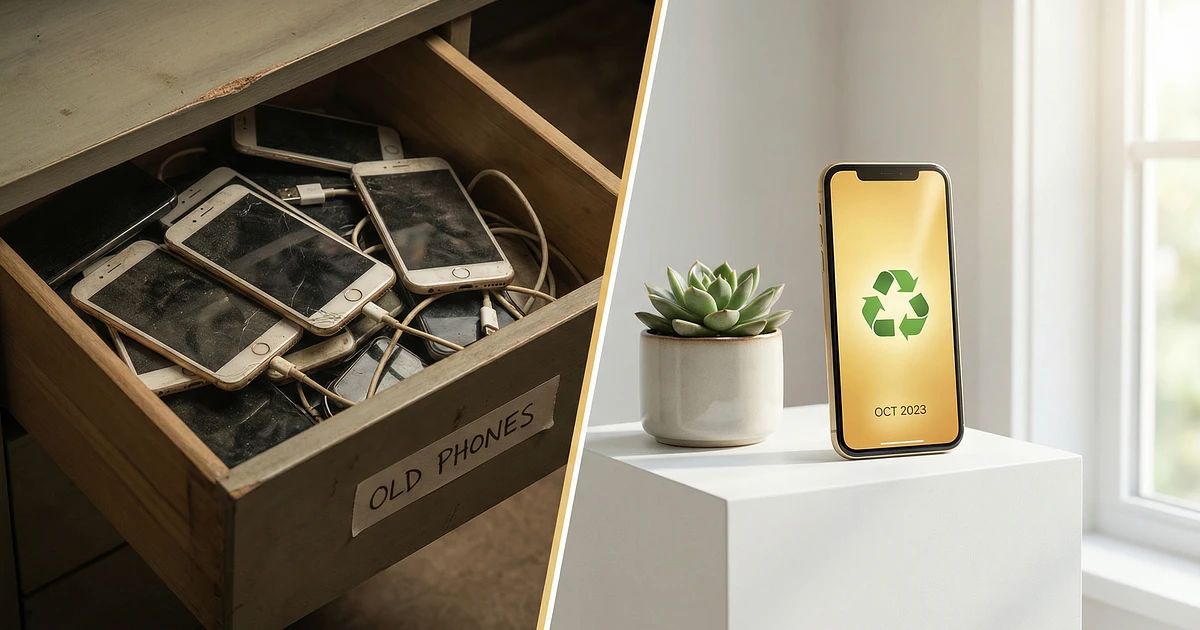
German households have around 300 million unused devices sitting around, according to a Bitkom survey. 210 million of those are smartphones alone. They're gathering dust in drawers while new devices require rare earth mining and carbon emissions.
E-Waste 2026: New Rules, Old Problems
Starting January 1, 2026, new ElektroG regulations come into effect, aimed at increasing e-waste recycling rates. Retailers must accept old devices, even without a new purchase.
This is important: Starting January 2026, it will become more expensive for retailers if they don't accept old devices. This could be the push that collection rates finally need.
But – and let's be honest here – many experts are skeptical. Why? Because the previous rules didn't work either.
That's the dilemma: The quotas get higher, but without real penalties, they remain empty promises. Even the experts are frustrated.
Barbara Metz from Deutsche Umwelthilfe sums it up: "Manufacturers and retailers have done far too little because missing quotas carries no consequences."
In short: When it gets expensive, then things happen. Without financial penalties, companies postpone collection, sorting, and recycling indefinitely.
And here it gets serious: German recycling facilities experience up to 30 fires per day. The cause is often lithium batteries in improperly disposed devices. Sounds like a Hollywood drama, but it's a real safety crisis.
That sounds dramatic, and it is dramatic. But it also shows why the simplest path is the best: Don't collect and recycle what's already broken. Instead, don't produce so much new e-waste in the first place.
Refurbished: The Solution Against E-Waste
Here's the clever part: The best solution against e-waste isn't disposing of it properly – that's still better than nothing. The best solution is not creating it in the first place.
How? By choosing "refurbished" instead of "new" for your next device purchase. Sounds trivial, but it's surprisingly effective.
If you're new to this: Refurbished means that devices are professionally restored, tested, and sold with a warranty – not just used. That's the important difference.
But to learn exactly how this protects the environment and why it's more than just a cost-saving measure, check out our comprehensive guide on Refurbished and Sustainability.
This isn't speculation – these are hard facts. Studies by French environmental agency ADEME show:
A refurbished smartphone produces 92% less CO2 than buying new
A refurbished laptop achieves 89% less CO2
For raw material consumption, we save over 91%
In other words: If you buy a refurbished phone instead of a new one, environmentally speaking, it's equivalent to driving 190 kilometers less by car.
And no, that doesn't mean you're getting a device with scratches and problems. Stiftung Warentest tested refurbished laptops in 2025 – and gave them a clear recommendation: "good."
Avoiding E-Waste: 3 Concrete Actions
The good news: You don't need to be perfect. These three steps are enough:
Step 1: Get the old phones out of the drawer
You don't use your old smartphone anymore – but it also costs you nothing to drop it off at a collection point. Many electronics stores accept old devices for free. No new purchase necessary.
Step 2: Rethink your next purchase
Need a new phone? Check if it's available refurbished for 30–40% off. Same device, same features, but you skip the raw material extraction.
It's easier than you think. Compare thousands of refurbished devices across all major providers – smartphones, laptops, tablets and more. Find the best price offer and protect the environment at the same time.
Step 3: Repair instead of replace
Your iPhone battery doesn't last 24 hours anymore? Before buying a new one, ask about a battery replacement. At Apple, that costs €55–80. New iPhone? €1,000+.
The Global E-waste Monitor 2024 calculates: Worldwide, we lose raw materials worth $170 million every single day because e-waste isn't recycled. Rare earths, copper, gold – simply gone.
You can't change this alone. But if you buy your next device refurbished instead of new, you save 92% CO2 and need 91% fewer raw materials. That adds up.
It doesn't have to stay this way. Start today by buying your next device used – with warranty, tested, and at better prices. Compare refurbished iPhones or other smartphones across all major providers. You'll be surprised how much you can save – and how much the environment benefits.