
Your smartphone is two years old and the battery dies by noon? I get it. By 4 PM, you're plugged into an outlet while everyone else is still going strong.
Phone battery replacement is the top reason Germans replace their phones, according to a Bitkom survey. Not because the processor is too slow or the camera is bad. Nope – because of a $20 part that's glued in place.
The good news: The EU is putting an end to this nonsense. The right to repair becomes reality in 2027.
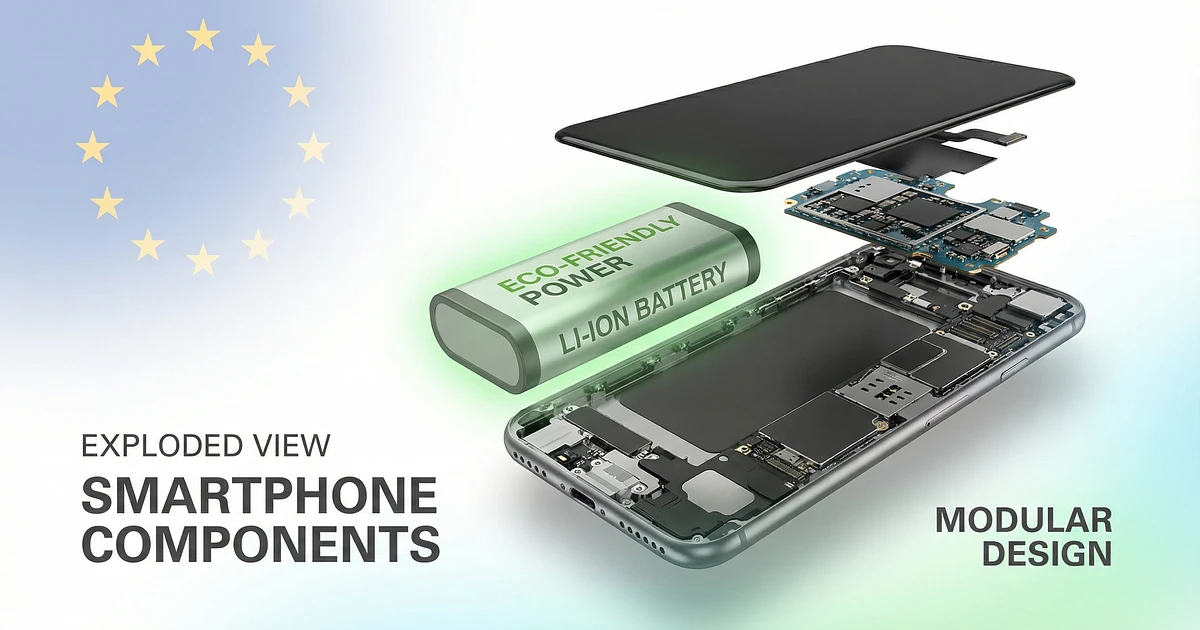
From February 2027, Article 11 of the EU Battery Regulation 2026 takes effect. Manufacturers must then install replaceable batteries. Or at least make sure smartphone battery change works without specialist tools.
What the EU Battery Regulation 2026 Actually Changes
What changes specifically from 2027? Three things that actually matter:
Spare parts stick around longer. Manufacturers must offer replacement batteries for at least five years after a model stops selling. No more "battery no longer available, please buy a new model" messages.
You won't need special tools. No heat guns, no proprietary adhesive, no 47-minute YouTube tutorial. Batteries must be swappable with commercially available tools.
Durability becomes mandatory. Here's where it gets interesting: Manufacturers may keep batteries sealed – but only if they retain 80% capacity after 1,000 charge cycles.
With normal use, that means three to four years without battery worries. The iPhone 15 already meets this requirement. According to Heise Online, Apple guarantees exactly these 1,000 cycles for the iPhone 15.
Phone Battery Replacement: What This Means for You
Sounds great, right? There's a catch, though.
The EU Battery Regulation 2026 only applies to devices hitting the market from 2027 onwards. Your iPhone 13 sitting on your desk? It won't benefit. And prices for new devices probably won't drop magically either.
Smartphone battery change for an iPhone currently costs between 59 and 139 euros at Apple directly. Third-party shops like MediaMarkt or local repair centers charge 40 to 100 euros – but you risk Apple voiding your warranty.
With a three-year-old device, you start wondering: Is it even worth it?
This is exactly where refurbished comes in – and it's available right now.
If you're not quite sure what refurbished actually means, we've put together a comprehensive guide.
Why Refurbished Is the Smart Choice Now
What many people don't realize: Reputable refurbished sellers already apply the 80-percent threshold today and replace batteries that fall below it. According to GIE.de, providers like Refurbed or Back Market replace batteries that fall below this limit. More on which sellers offer the best standards in our seller comparison.
Instead of getting phone battery replacement on your old device, you get a newer model with refurbished – already optimized battery performance included. Learn more about condition grades for refurbished devices in our Condition Guide.
Let's run the numbers on what this actually means:
| Option | Cost | What you get |
|---|---|---|
| New iPhone 15 | approx. 900 euros | New device, 24-month warranty |
| Battery swap (old iPhone 13) | 79-100 euros | Older processor, rest of device unchanged |
| Refurbished iPhone 14 | approx. 550 euros | Newer processor, fresh battery, 12-24 month warranty |
The middle option rarely makes sense. You're putting money into a device that's aging in other areas.
Here's a concrete example: You have an iPhone 12 from 2021. Battery replacement costs you 100 euros at Apple. For 450 euros, you can get a refurbished iPhone 14 – newer chip, better camera, fresh battery. Which would you choose?
You can compare refurbished iPhones with fresh batteries here.
The Environmental Factor (Without the Lecture)
The EU Battery Regulation 2026 didn't come out of nowhere: 5.3 billion phones become e-waste every year. That's roughly like every person on Earth throwing away their phone – except some people throw away several.
A refurbished smartphone causes 91.6 percent less CO2 than a new device. That's the difference between flying to Mallorca and walking around the block.
If you're wondering "Should I get phone battery replacement or buy refurbished?" here's the answer: Both options achieve what the EU Battery Regulation 2026 is aiming for – longer use, less resource consumption. Buying refurbished now does exactly what the EU will mandate from 2027 – just three years earlier.
More on how refurbished protects the environment.
Which Devices Already Meet the Standards?
Enough theory, though. Which smartphones actually meet the standards today?
The Fairphone 6 proves it's possible: 10 out of 10 points on the iFixit repairability score. Battery replacement takes under two minutes. No tools required. I'm not kidding – just pop it open, battery out, new one in. Like the old Nokia 3310, but modern.
This proves: Replaceable batteries and waterproof cases can coexist.
For the iPhone 15 and newer, Apple relies on the durability exception. 1,000 charge cycles with 80 percent remaining capacity means roughly three to four years of worry-free battery life with normal use.
Samsung and other manufacturers will likely take a similar approach. Truly user-replaceable batteries like the Fairphone will probably remain the exception.