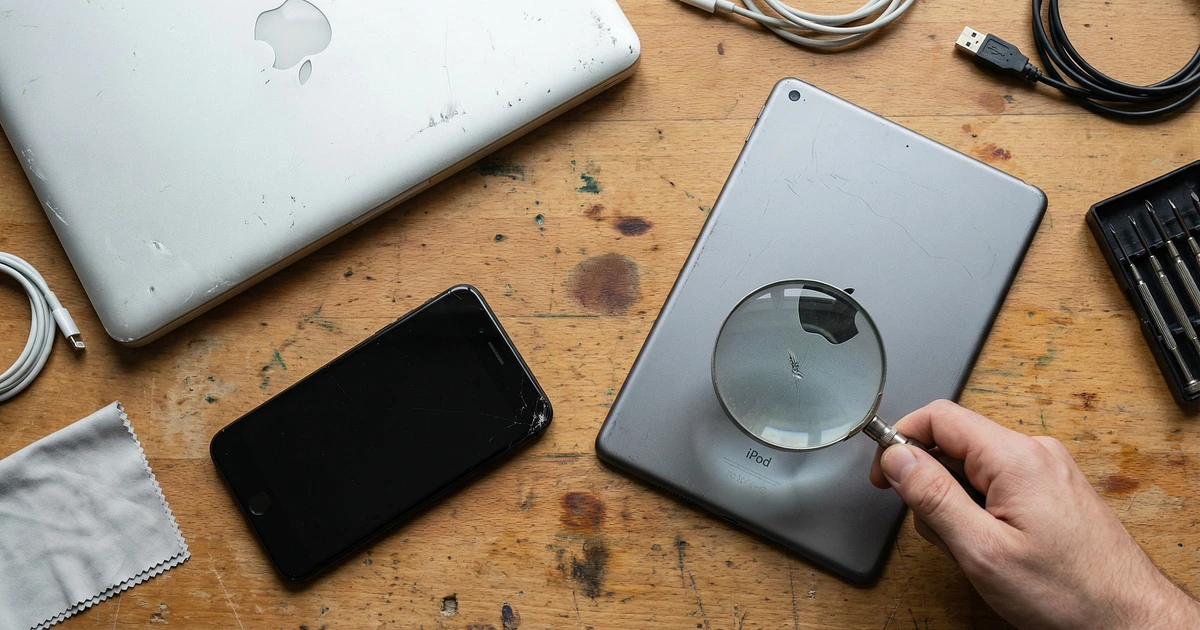

If you're looking for refurbished experiences, whether positive or negative, you're in the right place. A technician who asked to remain anonymous recently told me how his employer handles battery replacements. Original parts cost around 45 euros each. His company buys knockoffs from Asia for 5 euros instead. The difference in the final product? Invisible to customers at first. But six months later, the problems start.
That's just one story from a collection of refurbished disasters I've gathered over the past few months. From forums, review sites, and personal conversations. The good news: Almost all these problems can be avoided if you know what to look for.
Why Germans Have Cautious Refurbished Experiences
A study by the Wuppertal Institute reveals something interesting: Only 25% of Germans have ever purchased a refurbished device. That's the lowest rate in all of Europe. In the Netherlands, it's over 40%. In France, it's at least 35%.
I don't think this is about lacking environmental awareness. Germans are simply more skeptical when it comes to quality. And honestly, given some of the stories I've heard, that skepticism is justified.
Stiftung Warentest tested 45 refurbished smartphones. 9 of them had defects. That's 20%. One in five. That number sounds alarming, but it needs context: Most defects were minor issues like burned-in pixels or non-working fingerprint sensors. And almost all sellers exchanged the devices without hassle.
Still, 20% is a lot. So let's look at the most common problems.
The Seven Most Common Refurbished Problems from Real Experiences
1. The Battery Crash
From a ComputerBase forum post: A user bought a refurbished ThinkPad. The battery showed 63% capacity. Three weeks later, the indicator suddenly jumped from 63% to 0% and the device shut down. No warning.
This happens more often than you'd think. Many refurbished experiences show: Refurbishers promise "at least 80% battery capacity," but that number says little about actual remaining lifespan. A battery with 80% capacity might last another two years or collapse in three months. It depends on how it was treated before.
How to avoid this: Ask specifically about battery condition. Not just capacity, but also the number of charge cycles. On iPhones, you can find this under Settings > Battery > Battery Health. For laptops, you can use tools like coconutBattery (Mac) or BatteryInfoView (Windows).
2. The 5-Euro Replacement Parts
Back to the technician conversation from the beginning. It's not just batteries being replaced with cheap alternatives. Displays, charging ports, and even cameras too. The cheap parts work at first, but their lifespan is often short.
A concrete example: A Reddit user bought an iPhone with a "new display." Four months later, the touchscreen only responded sporadically. The cause: A no-name display without the temperature sensors of the original. In cold weather, it didn't work at all.
How to avoid this: Buy from sellers who transparently communicate which parts have been replaced. Some platforms like Apple Certified Refurbished only use original parts. It costs more but saves headaches in the long run.
3. The Warranty That Isn't
A story that particularly annoyed me: Someone bought a MacBook with "36 months warranty." After 14 months, the display started having issues. The seller? Pointed to the fine print. It said displays count as "wear parts" and only have 6 months warranty.
This is unfortunately legal. Many sellers advertise long warranty periods, but the conditions are full of exceptions.
How to avoid this: Read the fine print. Really. Pay special attention to: Which parts are excluded? Who pays shipping costs for warranty claims? Is there a deductible?
4. The Exploding MacBook
This is not an exaggeration. A user on CyberGuy reported a refurbished MacBook whose battery swelled and started smoking. The seller refused warranty coverage, claiming "improper use."
Swollen batteries are a known issue with older devices using lithium-ion batteries. With refurbished devices that still have the original battery, the risk increases.
How to avoid this: Ask explicitly whether the battery has been replaced. For laptops older than three years, I would generally expect a battery swap.
5. The Cosmetic Surprises
"Condition: Very good" can mean many things. For some, light scratches are acceptable. For others, they're not. The problem: Every seller defines their condition categories differently.
Someone from a forum bought an iPhone in "Condition A" that was supposedly "like new." It had a clearly visible dent on the side. The seller argued that "like new" only refers to functionality, not appearance.
My tip: Look closely at the seller's condition definitions. At refurbito, you'll find a condition comparison of all sellers that explains what refurbished actually means and the differences. If you absolutely need flawless appearance, only buy the highest condition tier or go with Apple Certified.
6. The Warranty Bureaucracy
Data from the Better Business Bureau on Back Market shows: 956 complaints over three years. Only 28% were resolved to customer satisfaction.
This doesn't surprise me. Even reputable platforms sometimes have issues with warranty processing. The reason: With marketplaces like Back Market, you're not buying from the marketplace itself, but from one of many connected sellers. If the seller doesn't cooperate, things get complicated.
How to avoid this: With marketplaces: Look at the ratings of the specific seller, not just the platform. Or buy from direct providers like Swappie or Rebuy, who refurbish their own devices.
7. The Software Trap
This is often forgotten: Refurbished devices are sometimes so old they no longer receive software updates. An iPhone 7 might be physically fine, but Apple no longer provides security updates for it.
TechSoup points out that outdated software is one of the biggest security risks with used devices.
How to avoid this: Check before buying how long the device will still receive updates. Apple doesn't officially announce this, but as a rule of thumb: iPhones are supported for about 5-6 years. Android devices usually only 3-4 years, with exceptions for Google Pixel (7 years for newer models) and Samsung (5 years for flagships).
But Wait, There's Good News Too
I don't want to paint a doom and gloom picture here. Despite all these negative refurbished experiences, the majority of refurbished purchases go smoothly.
An interesting statistic: 68% of all refurbished returns are classified as "No Fault Found." That means the devices worked perfectly. Often it's user error or unrealistic expectations.
And there are definitely success stories. On Amazon Renewed, for example: A user bought a MacBook Pro for 899 euros instead of 1,599 euros new. After two years of use: No problems, battery still at 91% capacity. Savings: 700 euros.
The difference between good and bad refurbished experiences usually comes down to four factors:
- The seller: Established providers with their own refurbishing are more reliable than anonymous marketplace sellers
- The device: Premium devices are often refurbished more carefully because the effort is worth it
- Expectations: Those expecting "almost like new" will be disappointed. Those who accept a working device with signs of use are usually satisfied
- Research: Those who take time to find which sellers best fit their needs have better experiences
The Hidden Economics Behind Cheap Refurbished
Why are there such quality differences anyway? The answer lies in the business model.
A reputable refurbisher invests 20-30 euros per smartphone in processing: cleaning, testing, possibly new parts, quality control. For laptops, it's even more. Add packaging, shipping, customer service, and warranty costs.
If a seller offers an iPhone significantly cheaper than competitors, they're saving somewhere. Usually on replacement parts (5-euro batteries instead of 45-euro originals) or on quality control.
The 5% defect rate for refurbished devices (compared to 3% for new) doesn't come from nowhere. It comes from exactly these cost cuts.
How to Buy Smarter: The Checklist
After all these refurbished experiences, here are the practical takeaways:
Before buying:
Ask about battery condition and charge cycles
Read the seller's condition definitions
Check warranty terms in detail
Verify software support
Read reviews about refurbished experiences with the seller
When choosing a seller:
Prefer direct providers (Swappie, Rebuy, Refurbed direct)
With marketplaces: Check individual seller ratings
Consider transparency about replacement parts as a quality indicator
Check community experiences in forums
Research return rates and customer support
After buying:
Test the device thoroughly right away
Use the return period if there are problems
Document the condition (take photos)
React quickly if issues arise
If you want to compare refurbished smartphones or check laptop prices, at refurbito you'll find all major sellers in one place.
The Honest Assessment
Is refurbished worth it despite all the risks? I say yes, but with caveats.
The potential savings are substantial: 30-40% compared to new devices, sometimes more. The environmental benefits are real: Up to 80% less CO2 than new production. And most refurbished experiences go well.
But you have to invest more effort than buying new. You have to research, compare, read the fine print. That's the price for the money saved.
If that's too much effort for you, buy new or go with Apple Certified Refurbished. You'll pay more, but you get Apple warranty and original parts.
If you're willing to invest some time, the bargains are out there. You just need to know what to look for.
Disclosure: refurbito earns affiliate commissions. If you buy through our links, we may earn a small commission at no extra cost to you.
Meta Information (English)
Title Tag: 7 Refurbished Experiences You Must Know (2026)
Meta Description: 20% defect rate with refurbished? Real experiences from community fails: What goes wrong with batteries, warranties, parts. Buy without risk.
Primary Keyword: refurbished experience
Secondary Keywords: refurbished problems, refurbished issues, refurbished negative experience
Internal Linking (Suggestions)
- "condition comparison of all sellers" → /condition-guide/
- "compare refurbished smartphones" → /products/smartphones/
- "check laptop prices" → /products/laptops/
- "what refurbished means" → /refurbished-guide/ (add to text if needed)
- "seller overview" → /partners/ (add to text if needed)