
July 2025. My old laptop dies. Right in the middle of a video call with my boss. Screen goes black, audio cuts out, everything crashes. Perfect timing. Not really.
I needed a new laptop. Fast. But spending 1,200 euros on a business notebook? With everything else costing what it does right now? I honestly couldn't justify that.
So I took the plunge. A refurbished ThinkPad X1 Carbon for 489 euros. Bought it, unboxed it, used it every single day for six months. Here's what actually happened.
Month 0: Why I Bought a Refurbished Laptop
I'll be honest. When I clicked "Buy," I felt uneasy. 489 euros is still real money. What if this thing falls apart after two weeks? What if the webcam produces blurry images and I look like a Minecraft character in my next meeting?
According to a Cranfield University study, refurbished laptops produce only 6.34% of the CO2 emissions of a new device. That was my main argument. But would the thing actually work?
Delivery arrived after four days. Condition listed as "Grade A," meaning minimal wear. I spent five minutes searching for scratches and found nothing. One tiny scuff on the lid. That was it.
While unboxing, I thought: Okay, this doesn't look like electronic junk. The refurbished laptop for my home office setup made a solid first impression.
Month 1: The Surprise
First workday. Boot up the laptop, log into Windows, launch Teams. Everything done in under 40 seconds. My old laptop? I could make coffee during that boot time.
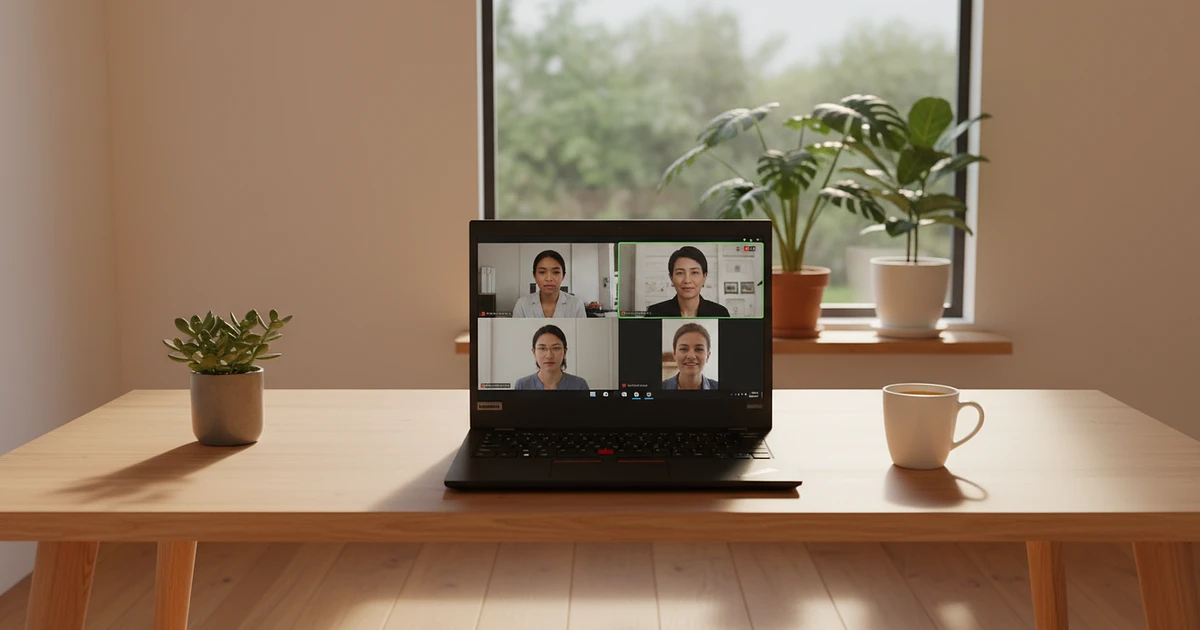
Video calls? They work. The webcam delivers 720p, which is perfectly fine for Teams and Zoom. According to Lenovo, these programs only need 4 GB RAM and a dual-core processor. My refurbished ThinkPad has 16 GB RAM and an i7. Way more than necessary.
First week: no issues. Second week: no issues. Third week: still no issues.
Battery life? 5.5 hours with normal use. Not the 8 hours the manufacturer promises. But honestly, when am I ever working without a power outlet nearby?
As a home office laptop, the device proved itself in the first four weeks. No crashes, no fan issues, no nasty surprises.
Month 2-3: Daily Reality in My Refurbished Laptop Test
This is where it gets interesting. Because the first week proves nothing. Any laptop can survive a week.
What I do daily:
3-4 video calls (ranging from 30 minutes to 2 hours)
Chrome with way too many tabs open
Slack, Notion, various cloud tools
Sometimes spreadsheets that nobody really needs
The laptop doesn't struggle. No constant fan noise like my old machine. During long video calls it gets warm, but not hot.
Battery capacity after three months? Windows reports 87% of original capacity. Industry standards say laptop batteries last 300-500 charge cycles before noticeable decline. My laptop shows 89 cycles. Plenty of room left.
One issue came up: The keyboard has American labeling. Works fine with German layout, but the umlauts are labeled in different spots. Doesn't bother me since I touch-type anyway. But if you look at the keys often, that could be annoying.
For a home office laptop, though, this isn't a dealbreaker. Most business devices have international keyboards anyway.
Month 4-5: My Refurbished Laptop Experience Under Pressure
August. 32 degrees outside. My home office has no air conditioning.
That's when I felt it for the first time: The laptop got noticeably warmer. Long video calls plus summer heat plus no ventilation equals a fan that has to work harder.
Did it crash? No. Did it lag? A little, when sharing large presentations. But that might have been my WiFi.
What I learned: A laptop stand helps. Costs 15 euros, improves cooling significantly. Should have bought one from the start.
Battery capacity in month five: 84%. The decline is normal. According to a UK study, lithium-ion batteries have an expected lifespan of 4.5 to 5.5 years. My battery is estimated to be 2 years old, so still in good shape.
In my refurbished laptop review under extreme conditions, the device performed better than expected. No total failure, just minor performance drops in heat. I can live with that.
Month 6: The Verdict on My Refurbished Laptop Experience
Today is January 2026. The laptop still runs.
No crashes. No hardware problems. The keyboard works, the display hasn't developed dead pixels, the battery still holds 4.5 hours.
Was it worth it? Let's do the math:
New ThinkPad X1 Carbon: approximately 1,400 euros
My refurbished model: 489 euros
Savings: 911 euros
Over 6 months: 81 euros per month for a reliable work laptop. That's less than what I spend on streaming subscriptions.
Analysis shows that refurbished laptops cost 30-60% less than new devices. In my case it was 65%. Plus, according to the Cranfield study, I saved about 316 kg of CO2. Feels good.
After six months, I can say: My refurbished laptop experience has been consistently positive. The refurbished laptop for home office work exceeded every expectation.
What I Would Do Differently
I learned two things.
First: Check the battery condition beforehand. Some sellers list the cycle count, some don't. Ask about it. Or buy from a vendor with good return policies in case the battery is already worn out.
Second: Laptop stand from day one. Costs almost nothing, makes a difference for cooling and for your neck.
What I did right: Choosing a business laptop. Compare ThinkPads, Dell Latitudes, and HP EliteBooks before buying. These machines are built for continuous operation. They age better than consumer laptops. Tests confirm this.
Anyone buying a refurbished laptop should specifically look for business models. They're worth the investment.
Who Should Get a Refurbished Laptop for Home Office Work
Short answer: Most remote workers.
If you mainly use office programs, browsers, and video calls, you don't need a new device. A refurbished business laptop from 2-3 years ago handles that easily.
When a refurbished laptop might not be enough:
You do video editing or 3D rendering
You need the latest graphics features
Having pristine battery life is extremely important to you
For everyone else? Give it a try. Most sellers offer at least 12 months warranty. According to a study analyzing 60,000+ comments, warranty matters more to buyers than price itself.
Compare current refurbished laptop deals directly here. Look at return policies, not just the price tag.
As a home office laptop, a refurbished business device is perfect. My experience shows: you save money, help the environment, and still get a reliable work machine.
My Biggest Takeaways From 6 Months
What do I take away from this refurbished laptop experience?
The biggest advantage: You save serious money. 911 euros in savings for the same performance. That's almost a full month's salary.
The biggest disadvantage: Battery is never like new. Expect 80-90% of original capacity. Fine for me, maybe not for everyone.
The surprise: Quality is better than expected. Grade A really means "like new." I actively looked for flaws and found almost nothing.
The learning: Business laptops age better. ThinkPads, Dell Latitudes, HP EliteBooks. These things are built like tanks. Consumer laptops? Often done after three years.
If you're looking for an affordable home office laptop, try refurbished. My experience shows: it works.