Buy a Used Camera in 2026: Why the Market for Mirrorless Is Growing
 6 min read
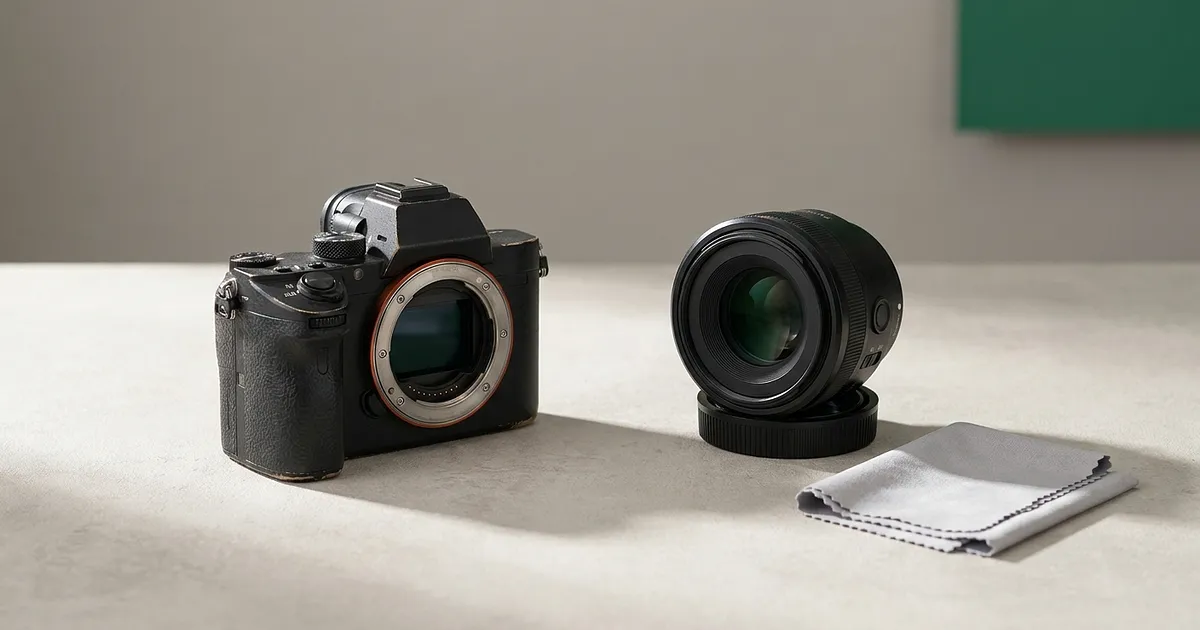
If you want to buy a used camera this year, you have noticeably more competition than you did two years ago. MPB, one of Europe's largest used-gear dealers, moved more than 564,000 cameras, lenses and accessories in its 2025 financial year, reported in January 2026. Net revenue climbed 19 percent. In Europe, 31 percent.
That's not a niche any more.
Cameras are the newest category in the refurbished market, alongside phones, laptops and tablets. See our German-language guides to buying a refurbished iPhone, buying a refurbished laptop and comparing refurbished tablets for how a purchase like that actually works.
Why is the used camera market growing right now?
Four things landed at roughly the same time. And none of them has much to do with camera technology itself.
New cameras cost more
Per a June 2026 analysis by Studio 1, US tariffs on Japanese imports, disrupted shipping routes and tight memory supply pushed camera models up 8 to 13 percent. Canon, Nikon, Sony, Fujifilm: all build in Japan. Industry voices quoted in that same piece don't expect relief before 2027 or 2028. A budget of 800 euros buys less camera today than it did in 2024.
Sustainability actually pencils out
Reused electronics produce roughly 70 to 90 percent less CO2 than new equivalents depending on the device class, according to the Global E-Waste Monitor 2024, and global e-waste is forecast to climb from 62 million tonnes in 2022 to 82 million by 2030. There's no camera-specific breakout in those numbers, to be fair.
NielsenIQ analyst Alexander Dehmel put it neatly to fotoMAGAZIN back in October 2025: refurbished products match the mood of the moment, because devices stay in use longer while buyers save money at the same time. Both halves, not one or the other.
People want a real camera again
Phones take good photos. Just apparently not the photos everyone wants right now. CIPA figures, reported by the Washington Times in August 2026, put compact camera shipments in the first half of 2026 around 16 percent above the same period a year earlier, cooling from the roughly 30 percent pace of 2025. Someone stepping up from a compact to a used mirrorless body tends to land in the second-hand market anyway, since entry there costs a fraction.
And more people are selling
This is the part with the softest numbers. We couldn't find solid German trade-in volume data for this piece, so treat it as reasoning rather than a statistic. Whoever upgrades sells the old body. More supply means more choice for you.
Buy a used camera or refurbished? Not the same thing
Quick answer: "Used" only means the camera had a previous owner. Condition and history aren't independently verified, and a warranty is the exception. "Refurbished" means a manufacturer or a certified refurbisher tested the camera, cleaned it, replaced faulty parts and sells it with its own warranty. Twelve months is the common term among German sellers.
In practice you spot the difference in the condition grade. Sellers like asgoodasnew.de sort refurbished cameras into "like new", "very good" and "good", down to budget stock, and test every unit before it ships. A private classified ad gives you none of that, though it's usually cheaper. Search directly and you'll often hit the filter labels "refurbished mirrorless camera" or "second-hand system camera", both describing the same tested unit with a warranty attached. Either route can be right, depending on the risk you want to carry. How refurbished differs from secondhand more generally is covered in our German-language comparison of refurbished and secondhand.
One example: the Sony Alpha 6000
The Alpha 6000 launched in 2014 and people still search for it constantly. New stock is basically gone. As a used mirrorless body or a refurbished mirrorless camera, though, it's easy to find, and it sits well below the price of a current entry-level body. A good example of why it's worth it to buy a used camera right now. Old enough to be cheap. Good enough to still be fun.
Buy a used camera: what's worth checking
Short version? Shutter count, sensor dust and scratches, whether a warranty comes with it, and what the return window actually looks like. (Side note: German photography forums generally treat a high but documented shutter count as a sign somebody looked after their gear, not a red flag.) A proper checklist is coming in a dedicated buying guide.
Refurbito doesn't sell anything and doesn't test anything. We compare what certified sellers are currently asking for a given device, so you don't have to click through five shops one at a time.
Will the boom hold? Honestly, we don't know. But as long as new cameras keep getting pricier and old ones keep outliving what manufacturers would prefer, there's not much arguing against buying a used camera now.
Frequently Asked Questions
What is the difference between a used and a refurbished camera?
Used only means the camera had a previous owner, with no independently verified condition and usually no warranty. Refurbished means a manufacturer or a certified refurbisher tested and repaired the body and sells it with its own warranty, typically twelve months among German sellers.
Is a used camera worth it, or is new better?
Depends on the model. On entry-level and mid-range mirrorless bodies the price gap is wide enough that used almost always wins, especially now that new prices rose through 2026 on tariffs. New makes sense only if you need one specific current feature or want the full manufacturer warranty.
Does a refurbished camera still come with a warranty?
Yes, usually. Certified refurbishers and the manufacturers' own refurbished programmes include a warranty, twelve months being common among German sellers. Privately bought gear with no reconditioning behind it carries no such promise.
Does a camera sensor wear out over time?
No. At least not the way a phone battery does. The sensor doesn't lose image quality in normal use. Wear shows up in the mechanics instead, mainly the shutter and lens mount, which is exactly what shutter count is used as a proxy for.