E-waste disposal in Germany – that sounds like a hassle: recycling center, Saturday morning, endless queues. 199.3 million old phones are sitting in German drawers when you could sell your old phone instead of just throwing it away. That broken electric toothbrush has been collecting dust in your bathroom cabinet for two years. And the dead hair dryer eventually ends up in the regular trash because the recycling center is packed on Saturdays and nobody has time during the week.
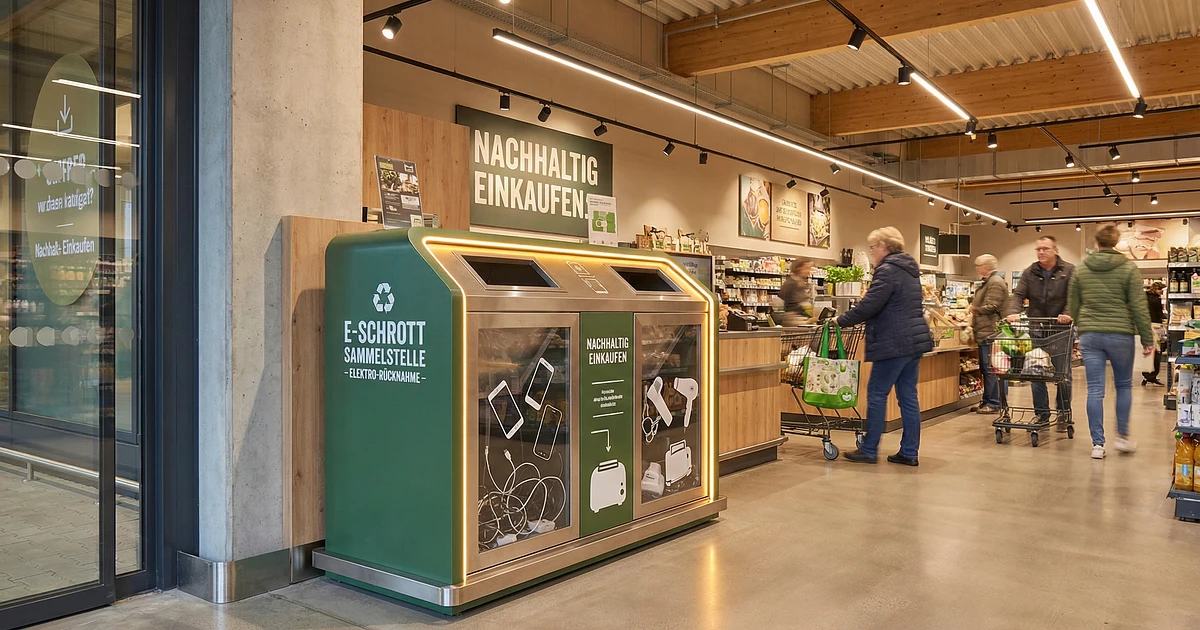
But there's been a much easier solution since July 2022: drop off old phones and dispose of e-waste during your next grocery run. No appointment, no detour, just during your weekly shopping.
Sounds like a good idea, right? It is – if supermarkets would actually cooperate.
E-Waste Disposal at Supermarkets: The Law Since 2022
Since July 1, 2022, supermarkets with over 800 square meters of sales space are required to take back small electronic devices. The condition: they sell electronics several times a year. That covers pretty much every Aldi, Lidl, Rewe, Edeka, or Netto location. E-waste disposal should be as easy as returning bottles for deposit.
The law is actually customer-friendly:
You can drop off small devices (up to 25 centimeters edge length) without buying anything – no "buy a new phone and we'll take the old one" like before. Free of charge, no receipt needed, regardless of where you bought the item. Maximum three devices per device type at once, but that's enough for most household cleanouts.
In other words: The law makes it easy to dispose of e-waste. Supermarkets make it difficult.
What counts as under 25 centimeters? Phones, shavers, electric toothbrushes, calculators, computer mice, cables, adapters, LED bulbs, small kitchen appliances. The Consumer Protection Agency clarifies: even illuminated shoe soles or smart textiles count. (Yes, really. In case you still have those light-up sneakers from the '90s.)
The Reality: Half of Supermarkets Refuse to Accept Returns
This is the part that makes me angry. A 2023 investigation by Deutsche Umwelthilfe found that at half of all tested locations, no returns were possible. Imagine: you're standing at the information desk with your broken shaver. "Sorry, we don't know anything about that." Even though the law has existed for a year and a half.
Two-thirds provided either no information or inadequate information to customers.
The DUH has since sued ten major retail chains: Aldi Nord, Aldi Süd, Lidl, Edeka, Rewe, Netto, Penny, real, and dm. Courts have already ruled against Aldi Süd and Lidl.
On paper this sounds great. In reality? A disaster.
Germany Fails at E-Waste Recycling – For Years
According to the Federal Environment Agency, Germany collects only 29.5% of its e-waste properly. The EU target is 65%. Germany has missed it for years. So when you try to dispose of your e-waste and the supermarket doesn't cooperate – you're part of the problem even though you're doing everything right.
NABU calculates that over 140,000 tons of small electronics end up incorrectly in regular household waste annually. Even better than proper disposal: preventing e-waste in the first place. That's problematic because e-waste contains toxic materials. And it's wasteful when it could be avoided through sustainable alternatives when buying electronics.
Planet Wissen breaks down what one ton of phone scrap contains: 240 grams of gold, 2.5 kilograms of silver, 92 kilograms of copper. Just sitting there unused – while we complain about rising raw material prices and simultaneously hoard millions of phones in drawers. The irony is painful.
How to Enforce Your Rights Anyway
The supermarket drop-off doesn't work on the first try? Try anyway – but with strategy.
Go directly to the information desk. Ask about e-waste returns. Many employees don't even know they're supposed to accept e-waste. Sometimes a friendly reminder is enough.
If they refuse: Mention the ElektroG (Electronics and Electrical Equipment Act). You don't need to be aggressive, but you're allowed to know your rights. Take note of names and dates if necessary – then you can report the violation to your local municipality.
Plan B works too. Recycling centers accept everything. MediaMarkt and Saturn as well. Not quite as convenient as during your weekly shopping, but better than regular trash.
Don't forget to delete your data. With phones, removing the SIM card isn't enough. The Bitkom study shows 80% of people think it is. It's not. Before you can drop off old phones, factory reset your device.
Fines: E-Waste in Regular Trash Is Expensive
Anyone who disposes of e-waste in regular household trash risks fines of up to 10,000 euros according to the German fine catalog, depending on the state. In practice, it's rarely enforced. But it's not legal.
The Bottom Line
Supermarket e-waste returns would be a brilliant solution: get rid of old electronics during your weekly shopping, no extra trip to the recycling center needed. The law exists. The infrastructure theoretically does too.
In practice, it fails because of retailers not following the rules. Employees who aren't informed. Customers who don't even know about the option.
If you don't know exactly what refurbished means and how it differs from used – we'll explain it to you.
My advice: Try it on your next shopping trip. Not because I believe it'll work smoothly – but because every attempt puts pressure on retailers. The more people ask about e-waste returns at the information desk, the more embarrassing it gets for supermarkets that have been ignoring a law for two years.
Best case, you get rid of your old stuff. Worst case, you annoy the right people. Both are a win.
And maybe next time you need a new phone, consider whether a refurbished iPhone might work. Less ends up in drawers, more stays in circulation.