E-Waste Day 2026: Fast Tech and overlooked small gadgets
 4 min read
An old laptop is easy to recognise as electrical equipment. A charging cable or a flashing toy might not prompt the same thought about electronic waste. That's where International E-Waste Day 2026 comes in: for 14 October 2026, the WEEE Forum has chosen Fast Tech as the campaign's focus. It means small, inexpensive electrical products bought casually, used briefly and then easily forgotten.
Noticing these items doesn't mean clearing them out. An unused device doesn't have to be broken or waste. The campaign draws attention to electronics beyond the familiar old appliances. It isn't a reason to buy replacements.
Fast Tech includes everyday accessories
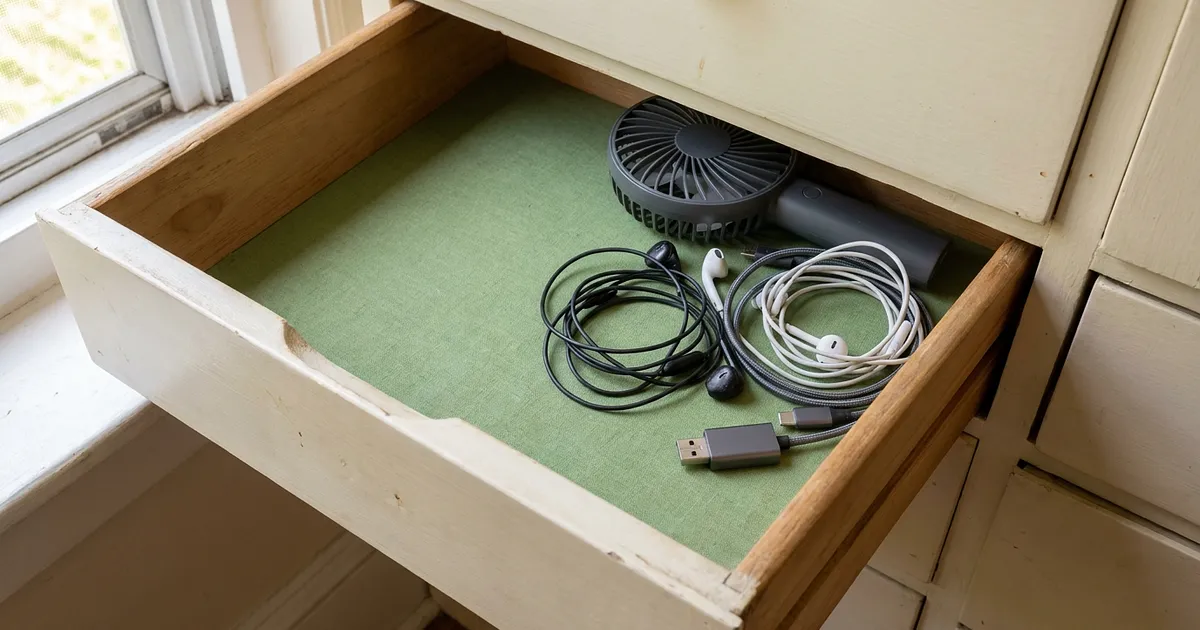
The WEEE Forum lists earphones, charging cables, USB adapters and LED lights among its examples. Mini fans and electronic toys also feature in the campaign. The purchase price says little about whether an object contains electrical components that still need proper collection when the item is no longer usable.
Fast Tech is a campaign term, not a legal equipment category. It describes a pattern of consumption: bought on impulse, used for a while, then forgotten. That doesn't mean every cheap accessory is poor quality or bound to fail early.
The phrase "throwaway product" can blur that distinction. Discarding every small gadget as a precaution misses the point of longer use. Broken electrical items don't belong in ordinary household rubbish.
Why the campaign includes mini fans
The UK organisation Material Focus discusses FastTech through the example of mini fans. That earlier UK research uses mini fans as an example of inexpensive devices soon left unused or thrown away. Its findings concern the UK, not German households.
A mini fan is small enough to seem like an incidental purchase. It's still an electrical device, even when summer is over.
Retailers and platforms are part of the picture too. The WEEE Forum's campaign addresses sellers' responsibility and compliance with requirements, rather than leaving the task entirely to buyers.
Keep useful devices in service
Germany's Umweltbundesamt emphasises longer use and avoiding unnecessary new purchases to conserve resources. Recycling and reuse do different jobs. Recycling recovers materials; reuse keeps a serviceable device doing something useful.
For your smartphone, our battery-care tips cover ways to support continued use. Whether a small gadget can be repaired or passed on depends on its condition and the particular product. Professional refurbishment can't be promised for every cable or toy. Our separate explainer covers what refurbished means.
A working cable doesn't need replacing. When it reaches the end of its useful life, the question changes to where it belongs. For the old-phone side of this issue, our guide to disposing of old phones offers further reading.
Frequently Asked Questions
What does Fast Tech mean?
The WEEE Forum uses Fast Tech for small, inexpensive electrical products bought casually, used briefly and then easily forgotten. It describes a pattern of consumption, not a legal equipment category. It doesn't mean every low-cost device is poor quality.
Which small objects does the campaign focus on?
The WEEE Forum's examples include earphones, charging cables, USB adapters and LED lights. Mini fans and electronic toys are also part of the campaign. What matters is whether the item contains electrical or electronic components, rather than the object's size or original price.
Should unused electronics immediately be recycled?
No. Unused doesn't automatically mean broken. A working device may still be useful to you or someone else. Repair and professional refurbishment depend on the individual product. Items that have genuinely reached the end of their useful life need an appropriate collection route.