Burden of Proof on Used Goods: New BGH Ruling Backs Refurbished Buyers
 5 min read
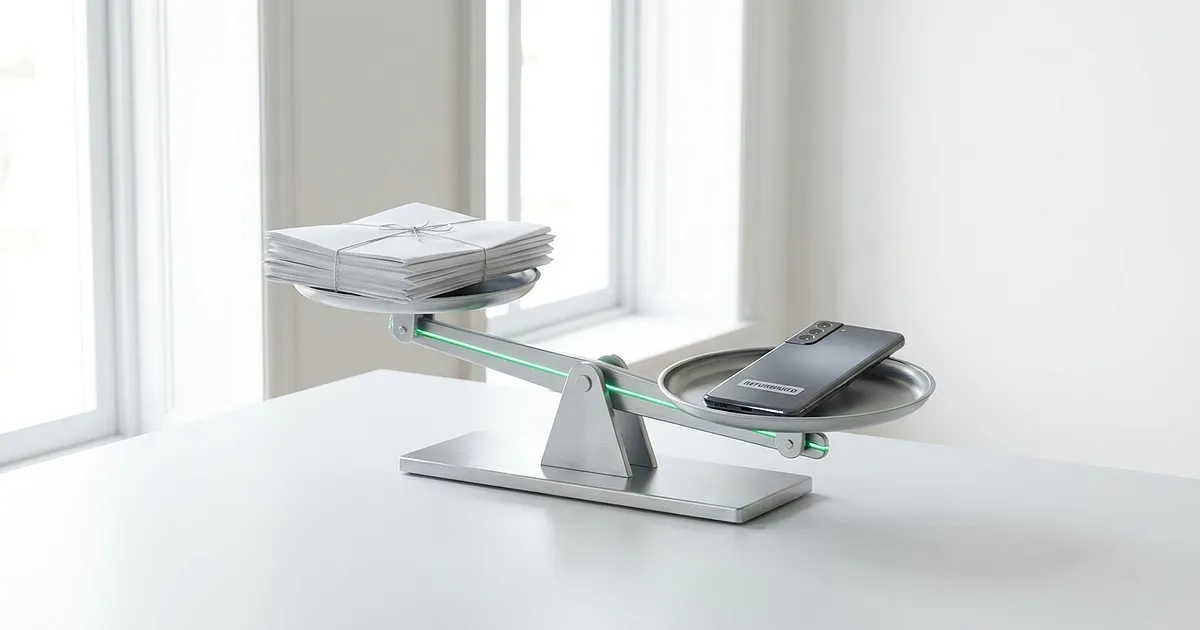
On 6 May 2026, Germany's Federal Court of Justice (BGH) ruled on the burden of proof under Section 477 BGB, and it matters for anyone who buys used tech from a business (case VIII ZR 73/24, joined with VIII ZR 257/23). Most of the coverage since then has been about cars. But the rule applies just as much to a refurbished phone.
What was the BGH ruling on the burden of proof actually about?
First, to avoid any confusion: the court didn't rule on electronics. One case involved a used car bought in August 2020 that burned out completely a few weeks later. The other was about a used scooter bought in August 2019.
In the car case, the lower courts had turned the buyer away because animal damage or arson were also possible causes. The BGH disagreed. As Legal Tribune Online reported on 7 May 2026, a mere "it could have come from somewhere else" isn't enough. The presumption only falls away when the only causes left lie outside the seller's sphere. The Karlsruhe Chamber of Commerce is passing the same message on to retailers.
Section 477 BGB, explained with a refurbished iPhone
Normally, you'd have to prove the defect existed at the time of purchase. Pretty much impossible, right? That's why Section 477 BGB exists: if a non-conforming condition shows up within a year of delivery, the goods are presumed to have been defective already. Until the end of 2021 the window was six months, and both BGH cases still fell under that old rule. LTO's take is that the reasoning carries over unchanged to the current version, though.
Applied to electronics, not a decided case but the same logic: say you buy an iPhone 16 Pro Max 256GB in "sehr gut" (very good) condition, listed at asgoodasnew for €799 on 28 September 2026. Three months in, it only charges now and then, and the seller blames a cheap charging cable. As long as a fault from the refurbishment remains a possible cause, that won't cut it. The seller has to prove it was down to you alone.
Honestly, there's one caveat worth adding. Not every weakness is a defect: a battery that has faded a little on an older device may be exactly what the listing described.
What does this mean for Refurbed, Back Market, rebuy and asgoodasnew?
The same rules apply to all four, because Section 477 kicks in whenever a business sells to you as a consumer (Section 474 BGB). That's our reading of the statute, even though none of the sources above names the four platforms by name.
Laptops work the same way. If the display on a MacBook Pro 2024 14" M4 in "wie neu" (like new) condition, listed at asgoodasnew for €1,548.20 on 28 September 2026, starts flickering after five months, the presumption is on your side.
That said, on Back Market and Refurbed your contract may be with a connected seller rather than the platform itself. Whoever sold the device is named on the invoice. Our post on proof of purchase for refurbished devices explains why it's worth keeping.
The statutory warranty on used goods (Gewährleistung) generally runs 24 months and, as Wertgarantie explains, can be cut to 12 months if that's expressly agreed. Don't mix it up with a guarantee. Germany's consumer advice centre, the Verbraucherzentrale, notes that a manufacturer's guarantee can even lapse once parts have been swapped. More on that in guarantee vs. statutory warranty on refurbished devices.
What to do if your refurbished device breaks
- Document the defect. Photos, a short video, the date it started, ideally the order number too.
- Tell the seller in writing, by email or through your account, while the window is still open.
- Getting a "could be your fault"? Point to Section 477 BGB and case number VIII ZR 73/24.
- Ask for a remedy first, meaning repair or replacement. Withdrawing from the contract usually comes after that.
Our German-language guide to filing a claim covers all four steps in more detail.
We think this ruling on the burden of proof is one of the better pieces of news this year for anyone who buys used, alongside the EU's new right to repair (German-language post), which added extra guarantee months after a repair back in July. Buying from a business leaves you noticeably better protected than a private sale, where the warranty is often excluded entirely. So if you're comparing offers on Refurbito right now, look at who's selling, not just the price.
Frequently Asked Questions
Does the burden of proof rule apply to used smartphones and laptops?
Yes. Section 477 BGB covers every consumer purchase from a business, whether it's a car or a phone. The fact that the 6 May 2026 ruling involved a used car and a scooter doesn't change that.
How long is the statutory warranty on used goods?
Generally 24 months. For used goods, which includes refurbished devices, the seller may cut it to 12 months if that's expressly agreed.
Do I have to prove the defect existed when I bought it?
In the first 12 months after delivery, usually not. The defect is presumed to have been there already, and the seller has to prove otherwise. After that, the burden of proof is back on you.
Does this also apply to private sales, such as on Kleinanzeigen?
No. The rule only applies when a business sells to a consumer. Private sellers can even exclude the warranty altogether.
Sources
- Federal Court of Justice (BGH) ruled on the burden of proof under Section 477 BGB bundesgerichtshof.de
- Legal Tribune Online reported on 7 May 2026 lto.de
- Karlsruhe Chamber of Commerce is passing the same message on to retailers ihk.de
- Section 477 BGB dejure.org
- Wertgarantie wertgarantie.de
- Verbraucherzentrale verbraucherzentrale.de