iPhone 17 Price Development: Why the Refurbished Discount Is Stalling
 6 min read
The pattern is usually boring in how predictable it is. A new iPhone ships, the outgoing generation loses value, and a few weeks later that same model gets noticeably cheaper on the refurbished market. The iPhone 17 price development in 2026 is doing something odd, though, and it's pulling in two directions at once.
Why a launch moves used prices at all
This has less to do with marketing than with inventory. People who buy the new model trade in the old one or sell it on. So within a few weeks, an unusual number of identical-generation devices land with buyback services and refurbishers at the same time. More supply, roughly the same demand, and the price gives way. A refurbished iPhone overview at Refurb.me describes the same pattern: older generations get better priced after a launch, without anything changing about the device itself.
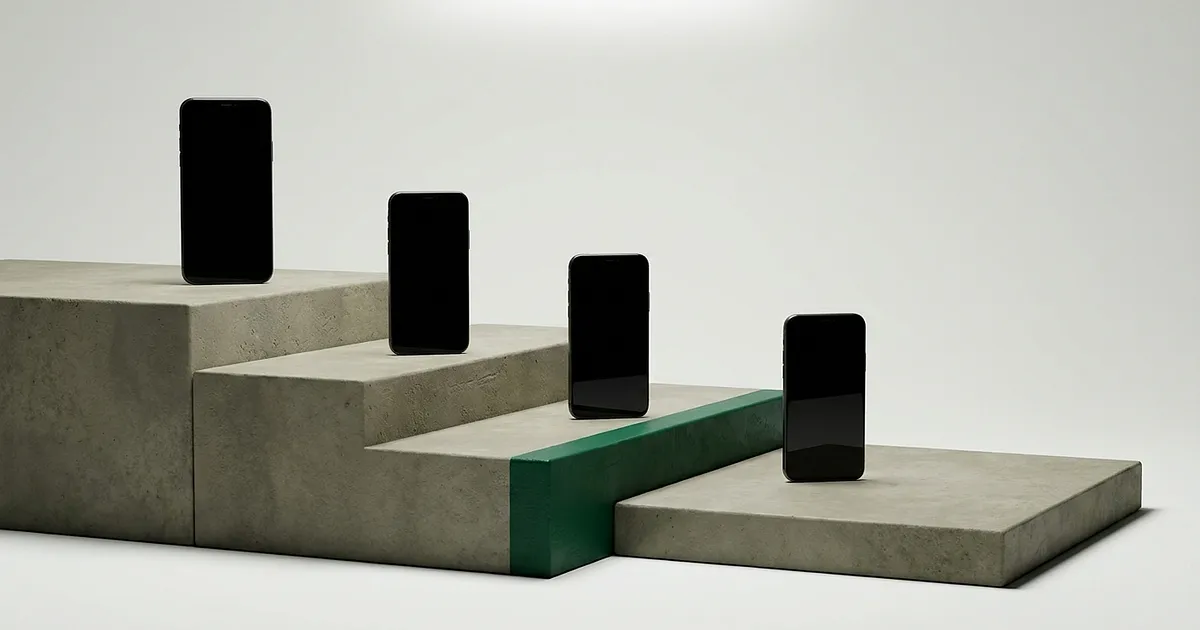
The effect rolls down the generations like a wave. You can see it first in refurbished iPhone 16 prices: the iPhone 16 slips because the 17 exists. The 15 slips because the 16 got cheaper. By the time you get to the 14, the movement is much smaller, mostly because there wasn't much room left underneath it anyway.
The iPhone 17 price development in 2026: an unusual counter-move
Two things are interfering with the usual pattern right now, and both push in the same direction.
Apple raised its official trade-in values on 7 August 2026, Germany included, at a point in the cycle that's fairly unusual for Apple, as NETZWELT reports. Hand your old device straight to Apple and you get more for it. Which sounds like good news, and mostly is. It also keeps devices away from the open refurbishing market, and thinner supply means less downward pressure on price.
Then there are the new prices. Apple is reportedly raising iPhone 17 family prices by up to 200 euros (as of 10 August 2026), driven by rising DRAM and NAND memory costs. Notebookcheck and WinFuture report it independently of each other. And a more expensive new device tends to drag used prices up with it rather than down.
If you want to see where refurbished iPhone 17 prices actually stand right now, our refurbished iPhone 17 price comparison starting at €560 has the current overview.
Honestly, nobody knows how long this holds. Memory pricing is cyclical, and it could look completely different in a few months. While it stays high, though, the classic post-launch discount on refurbished hardware is probably smaller than you remember from previous years.
What the iPhone 17 price development means for your iPhone 16, 15, 14 or older
Waiting looks less rewarding this time around. If the big drop is being cushioned by those raised trade-in values, the same device won't automatically be much cheaper six weeks from now. How large the gap actually turns out to be depends heavily on the seller. We're deliberately not naming fixed euro amounts here, since they shift constantly with model, storage and condition. It's worth checking our iPhone 16 refurbished price check if that's the generation you're watching, to see whether waiting even pays off there right now.
Which makes the seller matter more than the timing at the moment. For the same model, the same storage and the same condition, refurbisher offers often sit surprisingly far apart, and that gap is what the Refurbito price comparison exists for. Condition grades deserve a second look too: the labels differ from seller to seller and don't mean the same thing. What "Like New," "Very Good" and "Good" actually mean across different sellers is something we break down in detail. Each seller's own definition still belongs in the comparison.
I wouldn't read the current situation as a buy signal, and not as a warning either. Mostly it's a sign that the old rule of thumb, everything gets cheaper after a launch, is only half true for the iPhone 17 price development this year. The discount is still there. It's just smaller.
Frequently Asked Questions
When will the iPhone 17 Pro get cheaper?
There's no fixed date, and current reporting actually points the other way: according to Notebookcheck, the iPhone 17 Pro specifically is said to be first in line for a price hike, by up to 200 euros (as of 10 August 2026). Apple rarely discounts through its own list price, reductions tend to arrive via retailers and later via the successor model, usually months after launch. If saving money is the goal, the previous generation usually gets you there faster.
Does a refurbished iPhone 16 drop in price right after a launch?
Not instantly, and not in one jump. Traded-in devices have to be checked, refurbished and relisted first, typically over several weeks. On top of that, the trade-in values Apple raised on 7 August 2026 are thinning the supply reaching the open market. Expect a slow softening spread over weeks rather than a price crash on a single date.
Why are new prices climbing right now?
Reports point to DRAM and NAND memory costs as the driver (as of 10 August 2026), and that pressure is partly tied to the AI datacenter boom, which competes with phone makers for the same memory chips. Memory sits in every iPhone, and its pricing swings hard with global demand. When that line item gets more expensive, it hits the whole model family, regardless of how well any single device happens to be selling.
Should I wait, or buy a refurbished iPhone now?
It depends on how long you're willing to wait. The downward movement is shallower this year, so holding out for a few weeks probably won't gain you much. The spread between sellers for the same model in the same condition is usually bigger than the timing effect anyway. If you're not sure which model even fits your needs, our refurbished iPhone buying guide 2026 can help you narrow it down before you start comparing sellers.